Showing posts with label Fighter. Show all posts

Wednesday, July 25, 2012

IL-114P Patrol Aircraft

The IL-114P patrol aircraft is designed for aerial patrolling of exclusive economic zones, ports and sea coast, as well as air pollution control and environmental monitoring. The IL-114P searches for and detects surface vessels, identifies and locates them, determines their movement parameters; reveals cases of state border/economic area trespassing and provides target designation of trespassers. The aircraft can also be used for search, rescue and evacuation of casualties, and cargo transportation.

IL-114P Patrol Aircraft

The IL-114P Patrol Aircraft is capable of autonomous operation in adverse weather conditions, day and night, in a variety of climates. The aircraft and its systems are operated according to the "on-condition" maintenance scheme. The onboard electronic equipment includes surveillance radar, IR and television imaging systems, managing computer system, recording equipment, communication and automatic data transmission equipment, and environmental monitoring and photography system. External equipment includes searchlight and loudspeaker pods, gun pod, and survival equipment containers.

MiG-AT Combat Aircraft Trainer

The MiG-АТ Combat aircraft trainer is a classic configuration monoplane with a low mid-wing, two-seat tandem cockpit and two bypass turbojet engines. The aircraft’s aerodynamic layout and parameters allow it to perform flights practically in all subsonic flight modes characteristic of modern and prospective combat aircraft. Two Larzac 04R20 engines provide high steady-maneuvering loads, takeoff characteristics and rate of climb.

MiG-AT Combat Aircraft Trainer

The MiG-AT aircraft is equipped with integrated fly-bywire control system with digital and analogue parts redundancy. It provides required characteristics of stability and controllability, automatic limitation of angle of attack; engine thrust control, pre-selected radio altitude hold, spin recovery and bringing of the aircraft to straight and level flight.


The MiG-AT combat trainer ensures effective high-quality preparation of flight personnel within the short time thanks to its design simplicity, high reliability of its airframe, power plant and systems, long service life and low-cost life cycle, high maintainability, and excellent flight characteristics. An interactive training system and simulators are offered for on-ground formation of flying and technical personnel.

MiG-AT aircraft

MiG-AT Aircraft Specifications
Weight, kg:
normal/max take-off 5,210/8,150
max fuel
in internal tanks 1,680
in external tanks 2 х 470
Powerplant 2 х Larzac 04R20
Take-off thrust (ISA), kgf 2 х 1,440

Airspeed, km/h:
max level speed 850
take-off (with full fuel load) 183
landing 175
Max flight altitude, m 14,000
Max flight range, km 2,000
Operational g-load +8/-3
Service life, flying hrs 15,000
Dimensions:
length 12.01
wing span 10.16
height 4.01

MiG-AT

Yak-130 Combat Aircraft Trainer

The Yak-130 Combat Aircraft Trainer is designed for basic and advanced training of military flight school cadets, for retraining pilots to fly combat fighters in manoeuvre units, and as a light combat aircraft. The Yak-130 trainer is one of the major components of the integrated flight training system, which comprises ground training assets, simulators, a basic training aircraft, and a training management system. All these components are combined by common open-architecture software allowing further build-up of the system’s capacities.

Yak-130 Combat Aircraft Trainer

The Yak-130 aircraft trainer is capable of providing sufficient pilot training to fly any fourth- or fifthgeneration jet fighter, including the Su-30 and MiG-29 family aircraft, as well as Mirage 2000, F-15, F-16, Eurofighter Typhoon, F-22, and F-35 warplanes. The Yak-130’s high versatility facilitates its integration into different national air forces, as far as its technical specifications and operational characteristics are concerned.

The Yak-130 is fitted with a digital fly-by-wire system, which functions as an active flight safety
system and allows the instructor to adjust stability and controllability parameters to those of the aircraft being simulated. The Yak 130 aircraft cockpits are equipped with electronic displays completely identical in layout to those of fifth-generation aircraft. The aircraft can carry an integrated Osa or Kopyo radar, or an electro-optical station. If used jointly with the Pchela RPV, the Yak-130 can deliver standoff pinpoint strikes demonstrating increased combat efficiency, especially in mountainous areas.

Yak-130 aircraft trainer

YAK- 130 Armament
Eight underwing pylons and one ventral pylon are used for carrying up to 3,000 kg of payload such as air-to-air and air-to-surface missiles, rockets, bombs, external fuel tanks, and specialised (weapon guidance, reconnaissance, ECM) pods. It is equipped with the refuelling probe considerably enhancing the aircraft combat capabilities.

Yak-130 Specifications
Length, m 11.493
Wing span, m 9.72
Height, m 4.76
Take-off weight, kg:
max 9,000
normal, trainer version 5,700
Max combat load, kg 3,000
Max air speed, km/h 1,060
Service range, without external fuel tanks, km 2,000

Service combat radius, km:
without external fuel tanks 525
with external fuel tanks 915
Operational g-load +8/-3
Flight attack angles, deg up to 40
Take-off speed (trainer version), km/h 195
Landing speed (trainer version), km/h 180
Powerplant 2 x AI-222-25
or DV-2S turbofans
Crew 2

Yak-130 aircraft

Tuesday, July 24, 2012

MiG-29M and Mig 29M2 Multirole Fighter

The MiG-29M Fighter and MIG 29M2 multirole fighter is designed to defeat air and ground/surface targets by day and night in fair and adverse weather conditions, and in complex jamming environment. The aircraft features high combat effectiveness, outstanding flight performance characteristics, and easy operation.

Thanks to a second crewmember (on M2 version), certain combat missions, especially attacks against ground targets, operations within a group of MiG-29s, operations in jamming conditions, can be accomplished more effectively. The aircraft is equipped with an in-flight refuelling system. The MiG-29M aircraft is a new-generation MiG-29 aircraft. It differs from the latest MiG-29SMT upgrade by the increased internal fuel load, upgraded engine with increased thrust and smokeless combustion chamber, digital multichannel fly-by-wire control system, stores stations number increased to 8. The aircraft has a reinforced landing gear. Its flight life and service life are also increased to 6,000 flying hours and 40 years correspondingly. 

MiG-29M and Mig 29M2 Fighter

The aircraft is maintained on condition. The MIG-29M and MIG 29M2 fighter is unified with the MiG- 29K/KUB by 95%.

The MiG-29M/M2 Fighter avionics suite has an open architecture based on the MIL-STD-1553B multiplexing bus enabling integration of the onboard equipment and weapon systems of both Russian and foreign origins at customer request. The MiG-29M aircraft is equipped with the advanced weapons control system including the new Zhuk-M multi-function radar with enhanced operational range, multi-channel fire capability and modern air-to-ground modes of operation. The optical locating station and helmet-mounted targeting system make the avionic suite of the aircraft functionally complete. Integration of the targeting and navigational equipment on the basis of the modern computing system has helped to notably increase target acquisition range and sighting angles, as well as the number of targets simultaneously engaged (up to four).

Mig 29M2 Fighter

MiG-29M and Mig 29M2 Armament
The MiG-29M and Mig 29M2 weapons control system manages the RVV-АЕ, R-27ER1, R-27EТ1, R-27R1, R-27Т1, R-73E air-to-air guided missiles, Kh-29T(ТE), Kh-29L, Kh-31А, Kh-31P, Kh-35E air-to-surface guided missiles, КАB-500Кr, КАB-500L corrected bombs, unguided rockets, bombs and the GSh-301 built-in gun. An interactive training system and simulators are offered for on-ground formation of the flying and technical personnel.

Mig 29M2 Fighter

MiG-29M Fighter and MIG 29M2 specifications
                                          MiG-29М                    MiG-29М2
Crew                                       1                                    2
Take-off weight, kg:
normal                                17,500                            17,800
max                                    22,400                            23,700
Powerplant                                       RD-33МК
Afterburning thrust, kgf                     2 х 9,000
Max operational g-load                        9.0
Max airspeed, km/h:
at ground-level                                   1,500
at high altitude                  2,400                                2,200
Service ceiling, km                             17.5
Flight range, km:
w/o EFT /
with 3 х EFT                 2,000/3,200                      1,700/2,700
with 3 х EFT and one
in-flight refuelling, kg                  more than 5,500
Max external payload, kg            6,500

Mig 29K and Mig 29KUB Fighter

The MiG-29K and MIG 29KUB Fighter ship-borne multirole fighter is designed to perform naval groupings’ air defence tasks, to gain air superiority, to engage surface and ground (coastal) targets, including small-size ones, with precision-guided weapons, by day and night, in any weather conditions. The fighter is optimized for basing on aircraft carriers of medium displacement.


The MiG-29K fighter is a new-generation MiG-29 Fighter. It differs from the latest MiG-29SMT Fighter upgrade by increased internal fuel load, upgraded engine with increased thrust and smokeless combustion chamber, digital multi-channel fly by wire control system, and stores stations number increased to 8. For operations on the aircraft carrier the aircraft has an arrester hook and a reinforced landing gear. Its flight life and service life are also increased to 6,000 flying hours and 30-40 years correspondingly. The aircraft is maintained on condition.

Mig 29KUB Fighter

The Mig 29K and Mig 29KUB aircraft has an open-architecture avionics suite based on the MIL-STD-1553B multiplexing bus enabling integration of onboard equipment and weapon systems of Russian and foreign origins at customer requests. The MiG-29K aircraft is equipped with the modern weapons control system including the Zhuk-ME new multifunctional radar with enhanced operational range, multi-channel fire capability and modern air-to-ground modes of operation. The optical locating station and helmet mounted targeting system make the avionic suite of the aircraft functionally complete. Integration of the targeting and navigational equipment on the basis of the modern computing system has resulted in much greater target acquisition range and sighting angles while the number of targets simultaneously engaged is increased to four.

Mig 29KUB Fighter

Variants Mig 29KUB Fighter
The MiG-29KUB ship-borne combat trainer is designed for naval aviation pilots’ training and mastering flying skills, monitoring their techniques of flight management, navigation and combat employment, as well as pilot transition to the MIG-29K aircraft. In terms of its combat mission, the MiG-29KUB performs the entire scope of MiG-29K assigned combat tasks. The MiG-29KUB has a high degree of design commonality with the MiG-29K aircraft. It is also equipped with the Zhuk-ME airborne radar and carries the same weapons mix. The aircraft can be a baseline model for creation of reconnaissance, target designation, electronic countermeasures, and flight refuelling modifications.

The MiG-29K aircraft and MiG-29KUB aircraft have an integral in-flight refuelling system and are equipped with the UPAZ suspended universal refueling unit providing for in-flight refuelling of both internal and external fuel tanks. An interactive training system and simulators are used for on-ground formation of the flying and technical personnel.

MiG-29K fighter
MiG-29K fighter

Armament Mig 29K and Mig 29KUB Fighter
The weapons mix of the aircraft includes the RVV-AE and R-73E air-to-air guided missiles,
air-to-surface guided weapons, such as the Kh-35E and Kh-31A anti-ship missiles, Kh-31P
anti-radiation guided missiles and KAB-500Kr guided bombs. Unguided weapons include the
FAB-500 air bombs and rockets. The aircraft is armed with the GSh-301 built-in gun.


MiG-29SMT Fighter Russia Air Forces

The Mig-29smt Fighter is the latest comprehensive upgrading of the MiG-29 tactical fighter. It is to provide the fighter with entirely new combat capabilities by increasing its combat radius (flight range and endurance) at a minimal cost. As a result of the modernization, the aircraft has acquired high combat efficiency in air to air and air to surface missions. The aircraft has excellent manoeuvrability with reliability and flight safety enhanced. As a result of the modernization, the fighter’s service life reaches 4,000 hours (or 40 years with on-condition maintenance).

The MiG-29SMT aircraft features an open-architecture avionics suite, up-to-date information/control
cockpit environment with two multifunctional button-fitted liquid-crystal colour indicators, and HOTAS arrangement. System integration effected in compliance with the МIL-STD-1553В standard enables mounting of any equipment on the aircraft at customer requests. The MiG-29SMT Fighter is fitted with modern weapons control system including a modified radar targeting system with the new Zhuk-ME
multifunctional radar featuring increased range, multi-channel fire capability and advanced air-to-surface operational modes.

MiG-29SMT Fighter

 The optical locating station and helmet-mounted target designation system make the avionics suite functionally complete. Integration of the targeting and navigational equipment on the basis of the modern computing system has resulted in much greater target acquisition range and sighting angles while the
number of targets simultaneously engaged is increased to four.

The MiG-29SMT aircraft is fitted with new navigation and communication facilities, electronic countermeasures equipment, monitoring and recording systems, as well as optronic pods. An interactive training system, simulators and the MiG-29UBT combat trainer aircraft are used for on-ground formation of the flying and technical personnel.

MiG-29SMT Fighter

MiG-29SMT Armament
The aircraft guided weapons include the RVV-АЕ, R-27ER1, R-27EТ1, R-27R1, R-27Т1, R-73E air-to-air guided missiles, GSh-301 built-in gun, Kh-31А, Kh-31P, Kh-29T(ТЕ), Kh-35E airto surface guided missiles, and KAB-500Kr corrected bombs. If fitted with an optronic/laser pod, the fighter can employ the Kh-29L guided missiles and KAB-500L guided bombs. It can also deliver unguided weapons rockets and bombs.

Mig 29smt


MiG-29SMT Fighter specifications
Take-off weight, kg: normal 15,800 max 20,300
Powerplant RD-33 series 3
afterburning thrust, kgf 2 х 8,300
Max g-load 9.0
Max airspeed, km/h: at ground-level 1,500 at high altitude 2,400
Service ceiling, km 17.7
 

Flight range, km: w/o EFT / with 3 x EFT 1,800/3,100
with 3 х EFT and one in-flight
refuelling more than 6,000
Max external payload, kg 5,000

MiG-29SE Fighter Made Russian

MiG-29SE Fighter

The MiG-29SE light tactical fighter is designed for engagement of air targets, as well as ground and maritime targets. The fighter features high combat effectiveness, outstanding maneuverability, high reliability, and flight safety. The MIG-29SE is simple and economical in operation, being maintained
on condition. It has an increased flight life in excess of 3,000 flying hours and a service life of 30 years with possible prolongation.

The Mig 29SE Fighter or aircraft is equipped with the integrated weapons control system including the NO19-ME upgraded radar ensuring multiple target engagement with the RVV-AE air-to-air missiles,
optical locating station, and helmet-mounted target designation system. The aircraft is fitted with an in-flight refuelling system allowing it to receive fuel from both Russian and foreign air tankers.

MiG-29SE Fighter

An interactive training system, simulators and the MiG-29UB aircraft are used for onground formation of the flying and technical personnel. The aircraft can be equipped and armed with systems and munitions of foreign origin. Armament The upgraded weapons system includes the R-27ER1, R-27EТ1, R-27Т1, R-27R1, R-73E air-to-air missiles, GSh-301 built-in gun, air bombs and rockets.

MiG-29SE Fighter

MiG-29SE Basic specifications
Take-off weight, kg:
normal 15,300
max 20,000
Powerplant RD-33
afterburning thrust, kgf 2 х 8,300
Max g-load 9.0
Max airspeed, km/h:
ground-level 1,500
high-level 2,400
Service ceiling, km 17.75
Flight range, km:
w/o EFT / with 3 x EFT 1,500/2,900
with 3 х EFT and one in-flight
refuelling more than 5,400
Max external payload, kg 4,500

Mig 29 Fighter and MiG-29UB Fighter

The Mig 29 Fighter Mig 29 Fighterand MiG-29UB Fighter is designed for instructing and training pilots to fly the aircraft, intercept air targets and engage air and ground targets within the MiG-29’s altitude/airspeed combat envelope. It can also perform separate combat missions autonomously and within a MiG-29s group. The MiG-29UB differs from the combat fighter mainly by its two-seat cockpit, absence of the targeting radar and R-27R1 guided missiles.

The Mig 29 and Mig 29UB aircraft and its engines, flight-navigation system, armaments, communication aids and in-cockpit warning systems can be managed from both cockpits. The instructor’s cockpit accommodates a failures simulation console and a switching console to imitate operation of the radar targeting system during air target interceptions with simulated R-27R1 missiles. An interactive training system and simulators are used for on-ground formation of the flying and technical personnel.

Mig 29 Fighter

The MiG-29 light tactical fighter is designed to intercept and defeat air targets day and night under normal and adverse weather conditions in free air space and against ground surface in natural clutter and ECM environment, using airto air missiles with semi-active radar/IR seekers, as well as to destroy ground targets with unguided weapons in conditions of visual flight rules. It operates over friendly territory and in the near-operative and tactical zones of the enemy.


The variant Mig 29 Fighter features high combat effectiveness, outstanding maneuverability, high reliability and flight safety, and easy operation. The MiG-29 and MiG-29UB aircraft are baseline models for upgrades of varied complexity, including the MiG-29SE, MiG-29SMT, MiG-29UBT modifications. The aircraft has its air intakes closed to prevent foreign object damage of engines when moving on the ground, especially on poorly organized airfields and aprons.

MiG-29UB Fighter

The Mig 29 aircraft weapons control system consists of a radar targeting system with the N-019 radar and an electro-optical targeting/navigation system with an air target acquisition, lock-on and tracking optical locating system including an IR search-and-track system and a laser rangefinder, as well as a helmet-mounted target designation system.


A unique avionic system has been created thanks to the radar, optical locator and helmetmounted sight data fusion and algorithms integration. Data exchange between the optical locator and radar has helped to notably enhance noise immunity of the aircraft targeting system as a whole. The MiG-29 helmetmounted target designation system is used for quick locking-on to air targets visually detected by the pilot through the cockpit glass allowing him to designate a target within one second to the radar, optical locating station or directly to the missile seeker, with an accuracy adequate enough for effective weapons employment.


Mig 29 Fighter


Mig 29 Fighter Armament
The aircraft weapons include the GSh-301 built-in gun, as well as the R-27R1 and R-73E air to air guided missiles, rockets and bombs suspended under six external stores hardpoints.

Monday, July 23, 2012

MiG-31E Fighter Armament

The basic MiG-31E Fighter weapons mix includes four R-33E long-range missiles carried on a semi-recessed pylon under the fuselage, and R-40TD-1 and R-60MK missiles under the wing. The aircraft also has one GSh-6-23M six-barrel gun with the 260-round ammunition allowance.


The Armament">MiG-31E Fighter Armament weapons control system is built around a phased array radar. It can simultaneously track up to 10 air targets and attack up to four. The surveillance, tracking and attack envelope is limited by ± 70 deg in azimuth and +70…-60 deg in elevation. The radar can detect a target with a 19 sq.m radar cross section at 200 km. The WCS also includes an IR system providing concealed target acquisition and designation, and operation in severe ECM environment.


MiG-31E Fighter

The aircraft provides excellent interoperability within a group owing to the onboard radar and data transmission equipment ensuring automatic data exchange between four interceptors at a range of up to 200 km. The group leader assigns targets to his wingmen. A group of four MiG-31Es is capable of controlling an 800-900km-long frontline. The aircraft features EW assets operating both in the radar and IR frequency bands.

The MiG-31E Fighter interceptor is designed to intercept and destroy air targets at low and
high altitudes, in the forward and aft hemispheres, both in the lookup and lookdown modes, in all weather conditions, despite target manoeuvring and active/passive ECM. The aircraft can operate alone or within a group in the continuous or discrete field of control and guidance commands. It is capable of semiautonomous or fully autonomous operations against manoeuvring and ECM-protected targets.

MiG-31E Fighter

The MiG-31E Fighter is designed for employment as part of the nation’s air defence system. It is capable of long-endurance patrolling and engaging any airborne threats, including cruise missiles, helicopters and highaltitude reconnaissance aircraft. The MiG-31E can interoperate with various aircraft and provide target designation for up to three fighters, such as the MiG-21-93, MiG-23, MiG-25, MiG-29, and Su-27, and mask their attack.

MiG-31E

MiG-31E Fighter Basic specifications
Length (with airspeed boom), m 21.620
Wing span, m 13.456
Height, m 6.465
Max take-off weight, kg 46,200
Max air speed, km/h:
ground level 1,500
high-level 3,000
Service ceiling, m 20,600

Interception range, km:
M=2.35, H=18,000 m 720
M=0.8, H=10,000 m 1,450
M=0.8, H=10,000 m with one flight refuelling 2,250
Take-off run, m 1,200
Landing roll, m 800
Required runway length, m 2,500
Max g-load 5.0
Powerplant 2 x D-30F6
afterburning turbofans
Crew 2

Tuesday, May 22, 2012

Sea King HAR Mk3 Helicopter RAF

Sea King HAR Mk3 Helicopter

The Westland Sea King HAR Mk3 Helicopter entered RAF service in 1978 and the Mk3A in 1996; both marks of aircraft are used in the Search and Rescue (SAR) role. The aircraft are operated from six locations around the UK, with each location supporting two aircraft. There is also a detachment of two Sea King HAR3s Helicopter providing SAR cover in the Falkland Islands. The SAR squadrons provide 24-hour cover around the UK and the Falkland Islands throughout each year. Each squadron maintains a 15-minutes readiness state during daylight hours and a 45-minutes readiness state during the hours of darkness.

For the search aspect of its role, the Sea King Helicopter is able to operate to precise navigational standards and is fitted with a multi-band homing system, satellite navigation systems, a search radar, a comprehensive avionics suite and a large selection of radios. For its rescue role, the aircraft is equipped with a hydraulically-operated main rescue hoist, an electrically-operated emergency rescue hoist and electrical connections suitable for powering medical equipment such as incubators.

The SAR fleet of Sea Kings will shortly be fitted with a video/infrared detection pod, which is similar to the equipment used by police helicopters, to help search for casualties. All SAR crews are trained to operate using night-vision goggles over unfamiliar terrain. The standard SAR crew is made up of four members: two pilots, one of whom is the aircraft captain, a radar operator who acts as the winch operator at the rescue scene and a winchman, normally trained to paramedic standard, who will supply immediate first-aid and recovery services at the rescue site.
Sea King HAR Helicopter

Specifications
Powerplant: Two Rolls-Royce Gnome turboshaft
Thrust: 2778shp combined
Length: 22.15m (72ft 8ins)
Fuselage length: 14.4m (47ft 3ins)
Width: 4.98m (116ft 4ins)
Height: 5.13m (16ft l0ins)
Rotor span: 18.90m (62ft 2ins)
Max T/O weight: 9705kg (21,350lbs)
Max speed: l25kts (144mph)
Max altitude: 10,000ft

Sea King HAR Mk3

Monday, May 21, 2012

Puma and Puma HC1 Helicopter Force

The Puma HC1 Helicoter first entered service in 1971, and the RAF currently has a fleet of 33 aircraft available to the front-line Support Helicopter Force. The aircraft are operated by No 33 Squadron, which is based at RAF Benson, and by No 230 Squadron, which is based at RAF Aldergrove, in Northern Ireland. No 33 Squadron, which is divided into two flights and the operational conversion flight, offers flexibility in its role in that the aircraft of one of the flights are fitted with desert warfare specialist equipment, while the aircraft of the other flight are fitted with arctic warfare specialist equipment.

The Puma Helicopter are used as battlefield helicopters within the Joint Helicopter Command and provide tactical troop and load movement by day or by night. The aircraft can carry 16 fully equipped troops, or up to two tonnes of freight carried either internally or as an underslung load. The other major role is that of casualty or medical evacuation support, for which up to six stretchers can be fitted.

Puma Helicopter

Each aircraft is equipped with satellite-based global positioning system equipment and an instrument
landing system, enabling the aircraft to be navigated accurately and to be landed at suitably equipped airfields in poor weather conditions. The normal crew of two pilots, or a pilot and a weapons systems officer, plus a crewman, is trained in procedural instrument flying and tactical low flying by day and by night using night-vision goggles. The aircrew and their supporting ground crew are also trained to operate from inhospitable areas in all conditions ranging from desert to arctic environments.

For self defence, the Puma Helicopter is being upgraded with a new defensive-aids suite. This suite includes an integrated radar warning receiver, an AAR47 missile-approachwarning system, an ALQ 144 Infrared jammer and automatic chaff and flare dispensing equipment. In addition, two cabin-mounted 7.62mm general purpose machine guns can be fitted for use by the crewmen.

 Puma HC1 Helicopter

Puma Helicopter

Puma HC1 Helicopter
• Twin-engined battlefield helicopter operated by Joint Helicopter Command.
• Capable of operating under temperate, desert or arctic conditions.
• Carries troops, freight or casualties in support of the front-line.
• Fitted with modern avionics and self-defence equipment.
• Full operations capability by day or by night.

Specifications
Powerplant: Two Turbomeca Turmo 3-C4 turbines
Thrust: 1300shp each
Length: 14.08m (46ft 2ins)
Width: 3.00m (9ft 9ins)
Height: 4.54m (14ft 11ins)
Rotor span: 15.09m (49ft 7ins)
Max T/O weight: 7400kg (16,280lbs)
Max speed: 147kts (170mph)
Max altitude: 17,000ft

Merlin HC3 Helicopter RAF

Merlin HC3 Helicopter

The Merlin HC3 Helicopter is operated by No 28(AC) Squadron at RAF Benson and is the first of
a new generation of advanced, medium support-helicopters for the RAF. It is an all-weather, day
and night, multi-role helicopter used in both tactical and strategic operational roles. The aircraft carries an impressive defensive-aids suite, which includes a Radar and Laser Warning Receiver, Missile Approach Warners and Directional Infrared Counter Measures equipment, all integrated with an automatic chaff and flare dispensing system. This is one of the most comprehensive defensive-aids suites fitted to any helicopter in the world.

To ensure accurate navigation anywhere on the globe, the aircraft’s management computers take data
from its laser-gyro, inertial-navigation platform and its doppler system and from air data sources, and combine the information with precise position data received from Global Positioning System satellites. Navigation at night is enhanced by the crew’s use of night vision goggles and by the aircraft’s multi-function turret, which can be fitted with forward-looking Infrared radar. To increase the aircraft’s range, the Merlin Helicopter is equipped with extended-range fuel tanks and is capable of air refuelling. Further range can be achieved by shutting down the third engine during the cruising phase of flight. It is also fitted with an active vibration-damping system, which reduces the level of noise and vibration inside the cabin to a level no greater than that of a turboprop aircraft. As a result, crew fatigue is much reduced during long transits and airframe life is increased.

The Merlin Helicopter is able to carry a diverse range of bulky cargo, either internally or under-slung. Cargo can include artillery, Landrovers or light-strike vehicles and over five tonnes of freight. The spacious cabin can also accommodate up to 24 fully equipped combat troops and, when required, will convert to carry 16 stretchers for casualty evacuation or during humanitarian and disaster relief operations. Designed to operate away from base workshops and in difficult terrain, the Merlin Helicopter has state-of-the-art support technology and incorporates aircraft health-and-usage diagnostics and a self-test capability for ease of maintenance. The Merlin Helicopter is armed with two general purpose machine guns converted for the air role, although there is provision for additional weaponry to be fitted at a later date.

Merlin helicopter
Merlin HC3 Helicopter

Merlin HC3 Helicopter Specifications
Powerplant: Three Rolls-Royce Turbomeca RTM 322 turbines
Thrust: 2263shp each
Length: 22.8m (74ft 9ins)
Fuselage length: 19.43m (63ft 9ins)
Height: 6.62m (21ft 9ins)
Rotor diameter: 18.6m (61ft 1ins)
Max T/O weight: 14,600kg (32,120lbs)
Endurance: 4 hrs (600nmls) internal tanks.
Max airspeed: l67kts (192mph)
Max altitude: 15,000ft

Viking TMk1 Flying Training

Viking TMk1 Flying Training

The Grob G103A Twin II Acro, known by the RAF as the Viking TMk1 Aircraft, is used by the Air
Cadet Organisation to give basic gliding training to air cadets. The aircraft is currently used by 11 Volunteer Gliding Schools (VGSs) located at various sites around the UK. Their role is to train air cadets to a standard that will allow them to fly solo. Courses available to the air cadets are the gliding induction course, the gliding scholarship course and the advanced gliding training course. The aircraft is also used at the Air Cadet Central Gliding School, at Syerston, in Nottinghamshire, where it is used to train the VGS instructors.

Nottinghamshire, where it is used to train the VGS instructors. The Viking TMk1 is a high performance sailplane, which can be winch launched or aero-towed. The aircraft is fitted with a non-retractable tandem undercarriage and upper surface airbrakes. The Viking is a cost-effective, modern, high performance glider, ideally suited to its training role with the Air Cadet Organisation.

Viking TMk1 Flying Training
• Two-seat sailplane, designed for basic training, high-performance flying and simple aerobatic
flying.
• Tandem seating for a crew of two.
• Constructed using the latest techniques in industrial glass-reinforced plastic for lightweight and strength.
• Used to train air cadets to solo flying standard.

Specifications
Powerplant: The aircraft can be winch launched or aero-towed
Length: 8.18m (26ft 9ins)
Height: 1.55m (5ft 1ins)
Wingspan: 17.50m (57ft 4ins)
Max T/O weight: 625kg (1375lbs)
Max speed: 135kts (155mph)
Max altitude: 8,000ft

Viking TMk1

Vigilant TMk1 Aircraft By RAF

Vigilant TMk1 Aircraft

The Grob 109B motor glider, known by the RAF as the Vigilant TMk1 Aircraft, is used by the Air Cadet Organisation to give basic flying and gliding training to air cadets. The aircraft is built in Germany, but it has been modified to meet the RAF’s training requirements by the inclusion of an additional throttle in the cockpit and an increase in the maximum take-off weight. The Vigilant is currently used by 16 Volunteer Gliding Schools (VGSs), located at various sites around the UK. Their role is to train air cadets in basic flying techniques and to enable them to reach a standard where they are able to fly solo. Courses available to the air cadets are the gliding induction course, the gliding scholarship course and the advanced gliding training course. The aircraft is also used at the Air Cadet Central Gliding School, at Syerston, in Nottinghamshire, where it is used to train the VGS instructors.

The Vigilant is powered by a Grob 2500E1 horizontally opposed, four-cylinder, air-cooled engine, which provides a direct drive to a Hoffman Ho-V62 R/L160BT variablepitch, two-bladed propeller. The conventional landing gear, which is non-retractable, comprises two main wheels with fairings, and a tailwheel, which is steered through the rudder pedals. A retrofitted throttle is provided for use by the left-hand seat, giving the student the familiar military configuration of right-hand stick and left-hand throttle arrangement.

The Vigilant TMk1 is a cost-effective, modern aircraft. Its docile handling characteristics, combined with good fuel economy, make it an excellent training aircraft for cadets and instructors alike.

Vigilant

Vigilant TMk1 Aircraft
• Self-launching single-engined, low-wing, monoplane motor glider.
• Used as a basic flying and gliding training aircraft for the Air Cadet Organisation.
• Side-by-side seating, preferred for the basic flying-training role.
• Constructed from glass-reinforced plastic, for lightweight and strength.
• Used to train air cadets to solo flying standard.

Specifications
Powerplant: Grob 2500E1 horizontally opposed four-cylinder, aircooled engine
Rating: 95hp
Length: 8.10m (26ft 6ins)
Height: 1.70m (5ft 6ins)
Wingspan: 17.40m (57ft 1ins)
Max T/O weight: 908kg (1998lbs)
Max speed: 130kts (149mph)
Max altitude: 8,000ft

Vigilant TMk1

Jetstream TMk1 RAF

Jetstream TMk1 Aircraft

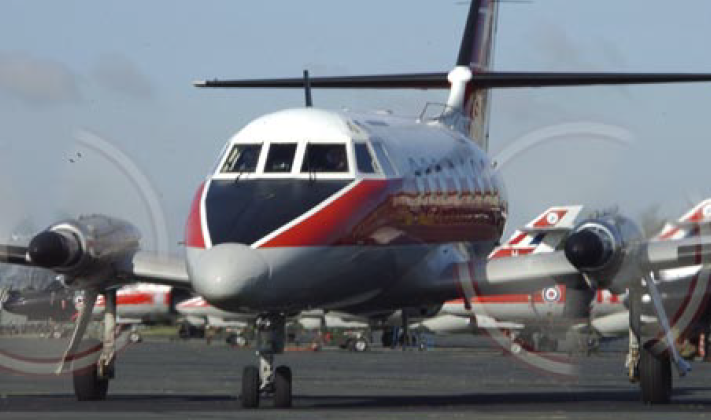
The Jetstream TMk1 Aircraft is a twin-engine, turbo-prop monoplane, which first entered RAF service in 1973. It is used as an advanced, multi-engine pilot trainer by No 45(R) Squadron, which is based at the RAF College Cranwell, in Lincolnshire. Prior to flying the Jetstream, elementary flying training students who have been selected to fly multi engined aircraft receive an additional 30 hours training on the Firefly multi engine lead-in (MELIN) course, which is also run by No 45(R) Squadron. During the MELIN course, students learn about crew cooperation and procedural flying to prepare them for their advanced flying training on the Jetstream.

A crew of two (student and instructor) operates the aircraft and students learn advanced skills such as twinengine general handling, asymmetric flying, formation flying, low-level flying and airways navigation. On completion of the course students are awarded their pilot’s wings, and then undertake their next flying phase at an operational conversion unit. A variety of courses are available using the Jetstream, based mainly on the student’s previous flying experience. This experience can be as little as 100 hours for a student arriving straight from elementary flying training, to a few thousand hours for a qualified pilot transferring to the multi engine role. In addition to its flying training role, the Jetstream can be used to carry up to 12 passengers or freight.

The Jetstream TMk1 has offered excellent service during its time in the RAF; however, it is now reaching the end of its active life. It is anticipated that it will be replaced in 2004 by the Beech King Air B200.

Jetstream TMk1

Jetstream TMk1 Aircraft
• Twin-engine turboprop used for pilot advanced flying training.
• Operated by a crew of two, with student pilot and instructor flight-deck crew.
• Used to teach multi-engine procedures and airways navigation.
• Can also be used to carry up to 12 passengers or freight.
• Current plans indicate it will be replaced in 2004.

Specifications
Powerplant: Two Turbomeca Astazou Mk16D turboprops
Rating: 968eshp each
Wingspan: 15.86m (52ft 1ins)
Length: 14.36m (47ft 2ins)
Height: 5.33m (17ft 6ins)
Max T/O weight: 6000kg (13,200lbs)
Max speed: 230kts (265mph)
Max altitude: 25,000ft

Jetstream

Dominie TMk1 New Version

Dominie TMk1 Aircraft

The Dominie TMk1 Aircraft, which has been in RAF Service since 1965, is the military training version of the Hawker Siddeley 125 twin-jet business aircraft. A total of nine aircraft are operated by No 55(R) Squadron at the RAF College Cranwell, where they are used to train weapons systems officers and operators, air engineers and air loadmasters in systems management, air leadership, decision making and teamwork to meet the operational demands of the RAF.

In 1996 the Dominie TMk1 aircraft underwent a major upgrade programme, with the installation of a modern avionics suite and a new systems installation and cabin layout, completed under contract by Racal and Marshall Aerospace. The design features included installation of a Super Searcher Ground-mapping Radar, which was fully integrated with the aircraft’s associated radio equipment, avionics systems, multicolour displays and navigation mission-computer.

The Dominie T Mk1 has a maximum crew of six and is generally operated with one pilot captain,
with the remaining aircrew comprising a balance of up to five students and instructors. Training sorties are usually of two to three hour’s duration and are flown in a mixture of regimes dependent on the stage of training and the exercise requirements. These sorties include a mix of low-level flying, maritime operations, radar handling and targeting training. Medium level, high level and general-handling sorties are flown for other training requirements, including trials flights conducted for the Air Warfare Centre at RAF Waddington.

Dominie TMk1

Dominie TMk1 Aircraft
• Used to train weapons systems officers and operators, air engineers and air loadmasters.
• Military training version of the Hawker Siddeley 125 business jet.
• Major upgrade in 1996, incorporating modern avionics, new operating systems and cabin
layout.
• Crew composition of one pilot captain and a total of five students/instructors.
• Mixed sorties of low, medium and high-level exercises dependent on training requirement.

Specifications
Powerplant: Two Rolls-Royce Viper Mk 301 turbojets
Thrust: 3310lbs each
Wing span: 14.33m (47ft 1ins)
Length: 14.48m (47ft 5ins)
Height: 4.87m (16ft 0ins)
Max T/O weight: 21,000lbs
Max speed: 284kts (327mph)
Max altitude: 42,000ft

Dominie TMk1 aircraft

Firefly T67 RAF Training Pilot

Firefly T67 Training Aircraft

The Firefly T67 Training Aircraft, which entered RAF service in 1996, is a two-seat aircraft used at the RAF College Cranwell for training pilots who have completed elementary flying training and have been selected for multi-engine training on the Jetstream TMk1. The Firefly is used on a Multi-Engine Lead-In (MELIN) course, which is an integral part of the role of the Jetstream training squadron, No 45 (R) Squadron. The course gives student pilots an insight into more advanced flying than they encounter on the elementary course and comprises general handling, procedural instrument flying, low-level navigation, formation flying, night flying and an introduction to dual-crew operations.

in Yorkshire, is a single piston-engined aircraft with a 260hp Textron Lycoming engine, which drives a three-blade, constant-speed, composite propeller. Its instrumentation and communications equipment allows it to be flown along airways and the aircraft is cleared for instrument flying and night flying. The Firefly is fitted with side-by-side dual controls, a fixed windscreen and a backward-tilting canopy incorporating direct ventilation windows and fresh-air scoops. The unpressurised aircraft is fully aerobatic and can easily maintain height during an aerobatic sequence. The aircraft also has fuel and oil systems capable of sustaining inverted flight.


The Firefly Aircraft can carry two pilots for over three hours of training. This endurance, coupled with a rapid climb rate of less than 10 minutes to reach 10,000ft, make it an excellent training aircraft.

Firefly Aircraft

Firefly T67 Aircraft

• Excellent performance, handling and visibility, with full aerobatic capability.
• Side-by-side seating, preferred for the basic flying-training role.
• Durable long-life airframe with a rugged, widetrack, fixed undercarriage.
• Low maintenance costs and minimum routineinspection requirements.
• Used for initial pilot training, prior to multiengine advanced training.

Specifications
Powerplant: Textron Lycoming flat sixcylinder engine
Rating: 260hp
Wingspan: 10.72m (35ft 3ins)
Length: 7.48m (24ft 7ins)
Height: 2.29m (7ft 6ins)
Max T/O weight: 1159kg (2550lbs)
Max range: 650nmls
Max speed: 154kts (177mph) at sea level
Max altitude: 10,000 ft

Firefly T67

Sunday, April 1, 2012

Tutor Aircraft RAF Flying Training

The Grob 115E, known by the RAF as the Tutor Aircraft, is used for Elementary Flying Training by the 15 University Air Squadrons and 12 Air Experience Flights throughout the UK. It is also used by the Central Flying School and for elementary navigator training at the RAF College Cranwell. All of the Tutor Aircraft in RAF service are entered on the UK Civil Aircraft Register and are provided by Vosper Thorneycroft Aviation.

The Tutor Training Aircraft is constructed mainly from carbonfibre reinforced plastic, which combines high strength with light weight. Like its predecessor, the Bulldog, the Tutor has side-by-side seating but, unlike the Bulldog, the primary flight instruments are on the right-hand side of the cockpit. This allows the student to fly the aircraft from the right-hand seat with a right-hand stick and a left-hand throttle so that future transition to fast-jet aircraft is made easier.

Tutor Aircraft
 Unpressurised, and powered by a Textron Lycoming 180hp piston engine driving a Hoffman three bladed, constant-speed propeller, the Tutor can cruise at 130kts at sea level and climb to 5,000 ft in seven minutes. The Tutor aircraft has a very clean airframe and has a three-minute inverted-flight time limit, making it ideal for aerobatics where, unlike previous RAF light aircraft, it loses little or no height during a full aerobatic sequence. The aircraft has a very modern instrument and avionics suite, including a Differential Global Positioning System, which, apart from giving excellent navigational information, can also be used to generate a simulated Instrument Landing System (ILS) approach for training use at airfields where ILS ground equipment is not fitted for the runway in use.


The Tutor is a cost effective, modern, elementary training aircraft. The combination of docile handling characteristics and good performance make it very suitable for its training role. Tutor Aircraft is Single engined monoplane used for elementary flying training and air experience flying. Constructed form carbon fibre reinforced plastic, giving high strength and light weight. Side by side seating, preferred for the elementary and basic flying training role. Modern instrument and avionics suite, including a global positioning system. Docile handling and good performance makes it very suitable for elementary flying training.

 
content="KxPS6GPOk1jXixOC5uWVt4sKw8A" />