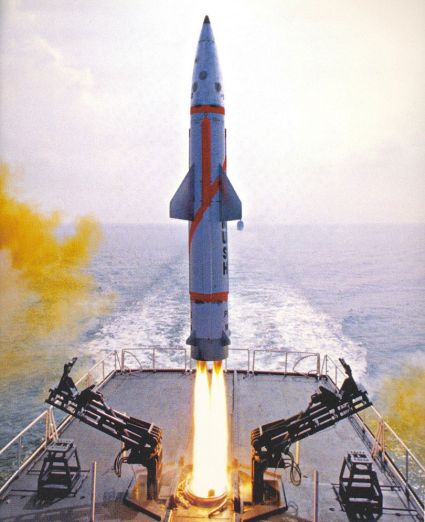
Russian Military
Russian military doctrine has placed new emphasis on these weapons. Facing sharp deterioration in the quality of its conventional military forces, Russia has taken a page from NATO’s book and ended the Soviet Union’s long-standing “no-first nuclear use” policy. Although this policy was never reflected in Soviet war plans or equipment, and despite the slow pace of Russian modernization of its nuclear forces, the doctrinal change suggests that while further reductions in Russian forces are possible, Moscow will be reluctant to move seriously into a negotiation aimed at eliminating all nuclear weapons until outstanding issues between it and the West are resolved.97 However, the surprising joint statement by presidents Obama and Medvedev in April 2009, announcing that they had “committed our two countries to achieving a nuclear free world,” is an encouraging sign of the potential for progress in that direction.

Writing in the Obama Administration’s earliest days, it is difficult to predict how seriously the president’s rhetorical support for eliminating nuclear weapons will be taken. It is certainly good politics—domestic and international—to support zero weapons as a goal or vision; actually seeking to begin negotiations toward
that end is something else. The administration would certainly be split on such a political initiative internally. Secretary of Defense Robert Gates, for example, a hold-over from the Bush Administration, has indicated he doesn’t believe the goal to be a realistic policy option, stating.
While we have a long-term goal of abolishing nuclear weapons once and for all, given the world in which we live, we have to be realistic about that proposition.” Secretary of State Hillary Clinton reaffirmed the Obama
Administration’s nuclear elimination goal during her nomination hearing before the Senate Foreign Relations Committee, but key appointments at Defense, State, and the National Security Council have tended to favor incremental approaches to arms reductions in their writings and previous government service.
The possible elimination of nuclear weapons
The issue will probably be discussed in the context of the “Nuclear Posture Review,” which the administration is required by legislation to submit in December, 2009. Proponents of a more visionary approach will not be helped by the Congressional Commission on the Strategic Posture of the United States, which the same legislation also established. In its final report, and despite the fact that its chairman is former Secretary of Defense William Perry, one of the four senior statesmen who kicked off the new attention to nuclear elimination, the Commission stated that, “The conditions that might make the elimination of nuclear weapons possible are not present today and establishing such conditions would require a fundamental transformation of the world political order.” This phrase may be interpreted to mean that the current international system would
have to morph into some sort of world government before nuclear weapons could eliminated, meaning that the “vision of a nuclear-free world,” will always remain just that, a “vision.”
In all likelihood, the Obama Administration will continue to pay rhetorical obeisance to the goal of nuclear elimination, if for no other reason than to help reduce problems at the NPT Review Conference to be held in June 2010, but will focus on four tangible actions:
• Attempting to persuade Iran to halt its nuclear weapons program short of an overt capability;
• Attempting to cajole North Korea into resuming progress toward fulfillment of its commitment to dismantle its nuclear weapons and supporting infrastructure;
• Negotiating a new, verifiable agreement with Russia for deeper reductions in the two nations’ nuclear arsenals, perhaps broadening the limits from their past focus on so-called “strategic” or long-range weapons to encapsulate shorter range weapons, as well as reserve warheads; and
• Seeking ratification of the Comprehensive Test Ban Treaty by the US Senate and, if successful, persuading other key states, especially China, India, Israel, and Pakistan to follow suit.
Russian military doctrine has placed new emphasis on these weapons. Facing sharp deterioration in the quality of its conventional military forces, Russia has taken a page from NATO’s book and ended the Soviet Union’s long-standing “no-first nuclear use” policy. Although this policy was never reflected in Soviet war plans or equipment, and despite the slow pace of Russian modernization of its nuclear forces, the doctrinal change suggests that while further reductions in Russian forces are possible, Moscow will be reluctant to move seriously into a negotiation aimed at eliminating all nuclear weapons until outstanding issues between it and the West are resolved.97 However, the surprising joint statement by presidents Obama and Medvedev in April 2009, announcing that they had “committed our two countries to achieving a nuclear free world,” is an encouraging sign of the potential for progress in that direction.

Writing in the Obama Administration’s earliest days, it is difficult to predict how seriously the president’s rhetorical support for eliminating nuclear weapons will be taken. It is certainly good politics—domestic and international—to support zero weapons as a goal or vision; actually seeking to begin negotiations toward
that end is something else. The administration would certainly be split on such a political initiative internally. Secretary of Defense Robert Gates, for example, a hold-over from the Bush Administration, has indicated he doesn’t believe the goal to be a realistic policy option, stating.
While we have a long-term goal of abolishing nuclear weapons once and for all, given the world in which we live, we have to be realistic about that proposition.” Secretary of State Hillary Clinton reaffirmed the Obama
Administration’s nuclear elimination goal during her nomination hearing before the Senate Foreign Relations Committee, but key appointments at Defense, State, and the National Security Council have tended to favor incremental approaches to arms reductions in their writings and previous government service.
The possible elimination of nuclear weapons
The issue will probably be discussed in the context of the “Nuclear Posture Review,” which the administration is required by legislation to submit in December, 2009. Proponents of a more visionary approach will not be helped by the Congressional Commission on the Strategic Posture of the United States, which the same legislation also established. In its final report, and despite the fact that its chairman is former Secretary of Defense William Perry, one of the four senior statesmen who kicked off the new attention to nuclear elimination, the Commission stated that, “The conditions that might make the elimination of nuclear weapons possible are not present today and establishing such conditions would require a fundamental transformation of the world political order.” This phrase may be interpreted to mean that the current international system would
have to morph into some sort of world government before nuclear weapons could eliminated, meaning that the “vision of a nuclear-free world,” will always remain just that, a “vision.”
In all likelihood, the Obama Administration will continue to pay rhetorical obeisance to the goal of nuclear elimination, if for no other reason than to help reduce problems at the NPT Review Conference to be held in June 2010, but will focus on four tangible actions:
• Attempting to persuade Iran to halt its nuclear weapons program short of an overt capability;
• Attempting to cajole North Korea into resuming progress toward fulfillment of its commitment to dismantle its nuclear weapons and supporting infrastructure;
• Negotiating a new, verifiable agreement with Russia for deeper reductions in the two nations’ nuclear arsenals, perhaps broadening the limits from their past focus on so-called “strategic” or long-range weapons to encapsulate shorter range weapons, as well as reserve warheads; and
• Seeking ratification of the Comprehensive Test Ban Treaty by the US Senate and, if successful, persuading other key states, especially China, India, Israel, and Pakistan to follow suit.