Showing posts with label British Army. Show all posts

Tuesday, May 22, 2012

Sea King HAR Mk3 Helicopter RAF

Sea King HAR Mk3 Helicopter

The Westland Sea King HAR Mk3 Helicopter entered RAF service in 1978 and the Mk3A in 1996; both marks of aircraft are used in the Search and Rescue (SAR) role. The aircraft are operated from six locations around the UK, with each location supporting two aircraft. There is also a detachment of two Sea King HAR3s Helicopter providing SAR cover in the Falkland Islands. The SAR squadrons provide 24-hour cover around the UK and the Falkland Islands throughout each year. Each squadron maintains a 15-minutes readiness state during daylight hours and a 45-minutes readiness state during the hours of darkness.

For the search aspect of its role, the Sea King Helicopter is able to operate to precise navigational standards and is fitted with a multi-band homing system, satellite navigation systems, a search radar, a comprehensive avionics suite and a large selection of radios. For its rescue role, the aircraft is equipped with a hydraulically-operated main rescue hoist, an electrically-operated emergency rescue hoist and electrical connections suitable for powering medical equipment such as incubators.

The SAR fleet of Sea Kings will shortly be fitted with a video/infrared detection pod, which is similar to the equipment used by police helicopters, to help search for casualties. All SAR crews are trained to operate using night-vision goggles over unfamiliar terrain. The standard SAR crew is made up of four members: two pilots, one of whom is the aircraft captain, a radar operator who acts as the winch operator at the rescue scene and a winchman, normally trained to paramedic standard, who will supply immediate first-aid and recovery services at the rescue site.

Sea King HAR Helicopter

Specifications
Powerplant: Two Rolls-Royce Gnome turboshaft
Thrust: 2778shp combined
Length: 22.15m (72ft 8ins)
Fuselage length: 14.4m (47ft 3ins)
Width: 4.98m (116ft 4ins)
Height: 5.13m (16ft l0ins)
Rotor span: 18.90m (62ft 2ins)
Max T/O weight: 9705kg (21,350lbs)
Max speed: l25kts (144mph)
Max altitude: 10,000ft

Sea King HAR Mk3

Monday, May 21, 2012

Puma and Puma HC1 Helicopter Force

The Puma HC1 Helicoter first entered service in 1971, and the RAF currently has a fleet of 33 aircraft available to the front-line Support Helicopter Force. The aircraft are operated by No 33 Squadron, which is based at RAF Benson, and by No 230 Squadron, which is based at RAF Aldergrove, in Northern Ireland. No 33 Squadron, which is divided into two flights and the operational conversion flight, offers flexibility in its role in that the aircraft of one of the flights are fitted with desert warfare specialist equipment, while the aircraft of the other flight are fitted with arctic warfare specialist equipment.

The Puma Helicopter are used as battlefield helicopters within the Joint Helicopter Command and provide tactical troop and load movement by day or by night. The aircraft can carry 16 fully equipped troops, or up to two tonnes of freight carried either internally or as an underslung load. The other major role is that of casualty or medical evacuation support, for which up to six stretchers can be fitted.

Puma Helicopter

Each aircraft is equipped with satellite-based global positioning system equipment and an instrument
landing system, enabling the aircraft to be navigated accurately and to be landed at suitably equipped airfields in poor weather conditions. The normal crew of two pilots, or a pilot and a weapons systems officer, plus a crewman, is trained in procedural instrument flying and tactical low flying by day and by night using night-vision goggles. The aircrew and their supporting ground crew are also trained to operate from inhospitable areas in all conditions ranging from desert to arctic environments.

For self defence, the Puma Helicopter is being upgraded with a new defensive-aids suite. This suite includes an integrated radar warning receiver, an AAR47 missile-approachwarning system, an ALQ 144 Infrared jammer and automatic chaff and flare dispensing equipment. In addition, two cabin-mounted 7.62mm general purpose machine guns can be fitted for use by the crewmen.

 Puma HC1 Helicopter

Puma Helicopter

Puma HC1 Helicopter
• Twin-engined battlefield helicopter operated by Joint Helicopter Command.
• Capable of operating under temperate, desert or arctic conditions.
• Carries troops, freight or casualties in support of the front-line.
• Fitted with modern avionics and self-defence equipment.
• Full operations capability by day or by night.

Specifications
Powerplant: Two Turbomeca Turmo 3-C4 turbines
Thrust: 1300shp each
Length: 14.08m (46ft 2ins)
Width: 3.00m (9ft 9ins)
Height: 4.54m (14ft 11ins)
Rotor span: 15.09m (49ft 7ins)
Max T/O weight: 7400kg (16,280lbs)
Max speed: 147kts (170mph)
Max altitude: 17,000ft

Merlin HC3 Helicopter RAF

Merlin HC3 Helicopter

The Merlin HC3 Helicopter is operated by No 28(AC) Squadron at RAF Benson and is the first of
a new generation of advanced, medium support-helicopters for the RAF. It is an all-weather, day
and night, multi-role helicopter used in both tactical and strategic operational roles. The aircraft carries an impressive defensive-aids suite, which includes a Radar and Laser Warning Receiver, Missile Approach Warners and Directional Infrared Counter Measures equipment, all integrated with an automatic chaff and flare dispensing system. This is one of the most comprehensive defensive-aids suites fitted to any helicopter in the world.

To ensure accurate navigation anywhere on the globe, the aircraft’s management computers take data
from its laser-gyro, inertial-navigation platform and its doppler system and from air data sources, and combine the information with precise position data received from Global Positioning System satellites. Navigation at night is enhanced by the crew’s use of night vision goggles and by the aircraft’s multi-function turret, which can be fitted with forward-looking Infrared radar. To increase the aircraft’s range, the Merlin Helicopter is equipped with extended-range fuel tanks and is capable of air refuelling. Further range can be achieved by shutting down the third engine during the cruising phase of flight. It is also fitted with an active vibration-damping system, which reduces the level of noise and vibration inside the cabin to a level no greater than that of a turboprop aircraft. As a result, crew fatigue is much reduced during long transits and airframe life is increased.

The Merlin Helicopter is able to carry a diverse range of bulky cargo, either internally or under-slung. Cargo can include artillery, Landrovers or light-strike vehicles and over five tonnes of freight. The spacious cabin can also accommodate up to 24 fully equipped combat troops and, when required, will convert to carry 16 stretchers for casualty evacuation or during humanitarian and disaster relief operations. Designed to operate away from base workshops and in difficult terrain, the Merlin Helicopter has state-of-the-art support technology and incorporates aircraft health-and-usage diagnostics and a self-test capability for ease of maintenance. The Merlin Helicopter is armed with two general purpose machine guns converted for the air role, although there is provision for additional weaponry to be fitted at a later date.

Merlin helicopter
Merlin HC3 Helicopter

Merlin HC3 Helicopter Specifications
Powerplant: Three Rolls-Royce Turbomeca RTM 322 turbines
Thrust: 2263shp each
Length: 22.8m (74ft 9ins)
Fuselage length: 19.43m (63ft 9ins)
Height: 6.62m (21ft 9ins)
Rotor diameter: 18.6m (61ft 1ins)
Max T/O weight: 14,600kg (32,120lbs)
Endurance: 4 hrs (600nmls) internal tanks.
Max airspeed: l67kts (192mph)
Max altitude: 15,000ft

Chinook Support Helicopter RAF

The RAF operates the largest fleet of Chinook Support Helicopters after the US Army, with a total of 34 HC2s, 6 HC2As and 8 HC3s (the HC3 has yet to enter operational service). The Chinook Wing, which forms the heavy-lift element of the Joint Helicopter Command (JHC), is based at RAF Odiham in Hampshire. Odiham supports three operational squadrons, No 7 Squadron, No 18 Squadron and No 27 Squadron, and the Operational Conversion Flight.

The Chinook HC2 Helicopter and Chinook HC2A Helicopter are used primarily for trooping and for carrying internal and/or underslung loads and can carry up to 55 troops or 10 tonnes of freight. The cabin is large enough to accommodate two Landrovers, while the three underslung load hooks allow a huge flexibility in the type and number of loads that can be carried externally. Secondary roles include search and rescue and casualty evacuation, in which role a total of 24 stretchers can be carried. The crew consists of either two pilots, or a pilot and a weapons systems officer (WSO), and two air loadmasters.

Chinook Helicopter

The pilot captain is responsible for the safe operation of the aircraft and completion of the mission, while the co-pilot or WSO operates the mission-management systems, navigation, communications and the self-defence suite. In the cabin are two air loadmasters who are responsible for passenger safety, load or cargo restraint, weapons operation and voice marshalling of the aircraft.

Chinook Support Helicopter RAF

The Chinook Helicopter are well equipped for their varied roles and are fitted with a satellite Global Positioning System, an Instrument Landing System, comprehensive avionics that enable them to fly in airways, and an extensive radio suite. The aircraft cockpit has a full night-time capability when operated with night-vision goggles, thus allowing low-level night operations in a hostile environment. The aircraft also carries dualmode landing lights that can be switched between white and Infrared light, which are supported by Infrared searchlights operated by the two crewmen. The Chinook is well equipped with defensive aids and has a Radar Warning Receiver, an Ultraviolet and Doppler Missile Approach Warning System, Infrared Jammers and chaff and flare dispensers, which can be manually or automatically fired. The aircraft can be armed with two M134 six-barrelled Miniguns, one in each front side window, and an M60D machine gun on the ramp.

The Chinook is a very capable and versatile support helicopter that can be operated in many diverse
environments ranging from cold weather ‘arctic’ conditions to desert warfare operations. It has been
involved in most of the recent UK Operations such as the Falklands Conflict, Northern Ireland, the Gulf War, peace keeping in Bosnia, Kosovo operations, evacuation of Sierra Leone, operations in Afghanistan and, more recently, in Iraq.

Chinook

Chinook Helicopter Specifications
Powerplant: Two Textron Lycoming T55-L712F turboshafts
Thrust: 3750shp each
Length: 30.18m (99ft)
Fuselage length: 15.54m (51ft)
Height: 5.78m (18ft 11ins)
Rotor diameter: 18.29m (60ft)
Endurance: 23/4hrs internal tanks
Max T/O weight: 24,500kg (53,900lbs)
Max airspeed: 160kts (185mph)
Max altitude: 15,000ft

Viking TMk1 Flying Training

Viking TMk1 Flying Training

The Grob G103A Twin II Acro, known by the RAF as the Viking TMk1 Aircraft, is used by the Air
Cadet Organisation to give basic gliding training to air cadets. The aircraft is currently used by 11 Volunteer Gliding Schools (VGSs) located at various sites around the UK. Their role is to train air cadets to a standard that will allow them to fly solo. Courses available to the air cadets are the gliding induction course, the gliding scholarship course and the advanced gliding training course. The aircraft is also used at the Air Cadet Central Gliding School, at Syerston, in Nottinghamshire, where it is used to train the VGS instructors.

Nottinghamshire, where it is used to train the VGS instructors. The Viking TMk1 is a high performance sailplane, which can be winch launched or aero-towed. The aircraft is fitted with a non-retractable tandem undercarriage and upper surface airbrakes. The Viking is a cost-effective, modern, high performance glider, ideally suited to its training role with the Air Cadet Organisation.

Viking TMk1 Flying Training
• Two-seat sailplane, designed for basic training, high-performance flying and simple aerobatic
flying.
• Tandem seating for a crew of two.
• Constructed using the latest techniques in industrial glass-reinforced plastic for lightweight and strength.
• Used to train air cadets to solo flying standard.

Specifications
Powerplant: The aircraft can be winch launched or aero-towed
Length: 8.18m (26ft 9ins)
Height: 1.55m (5ft 1ins)
Wingspan: 17.50m (57ft 4ins)
Max T/O weight: 625kg (1375lbs)
Max speed: 135kts (155mph)
Max altitude: 8,000ft

Viking TMk1

Vigilant TMk1 Aircraft By RAF

Vigilant TMk1 Aircraft

The Grob 109B motor glider, known by the RAF as the Vigilant TMk1 Aircraft, is used by the Air Cadet Organisation to give basic flying and gliding training to air cadets. The aircraft is built in Germany, but it has been modified to meet the RAF’s training requirements by the inclusion of an additional throttle in the cockpit and an increase in the maximum take-off weight. The Vigilant is currently used by 16 Volunteer Gliding Schools (VGSs), located at various sites around the UK. Their role is to train air cadets in basic flying techniques and to enable them to reach a standard where they are able to fly solo. Courses available to the air cadets are the gliding induction course, the gliding scholarship course and the advanced gliding training course. The aircraft is also used at the Air Cadet Central Gliding School, at Syerston, in Nottinghamshire, where it is used to train the VGS instructors.

The Vigilant is powered by a Grob 2500E1 horizontally opposed, four-cylinder, air-cooled engine, which provides a direct drive to a Hoffman Ho-V62 R/L160BT variablepitch, two-bladed propeller. The conventional landing gear, which is non-retractable, comprises two main wheels with fairings, and a tailwheel, which is steered through the rudder pedals. A retrofitted throttle is provided for use by the left-hand seat, giving the student the familiar military configuration of right-hand stick and left-hand throttle arrangement.

The Vigilant TMk1 is a cost-effective, modern aircraft. Its docile handling characteristics, combined with good fuel economy, make it an excellent training aircraft for cadets and instructors alike.

Vigilant

Vigilant TMk1 Aircraft
• Self-launching single-engined, low-wing, monoplane motor glider.
• Used as a basic flying and gliding training aircraft for the Air Cadet Organisation.
• Side-by-side seating, preferred for the basic flying-training role.
• Constructed from glass-reinforced plastic, for lightweight and strength.
• Used to train air cadets to solo flying standard.

Specifications
Powerplant: Grob 2500E1 horizontally opposed four-cylinder, aircooled engine
Rating: 95hp
Length: 8.10m (26ft 6ins)
Height: 1.70m (5ft 6ins)
Wingspan: 17.40m (57ft 1ins)
Max T/O weight: 908kg (1998lbs)
Max speed: 130kts (149mph)
Max altitude: 8,000ft

Vigilant TMk1

Jetstream TMk1 RAF

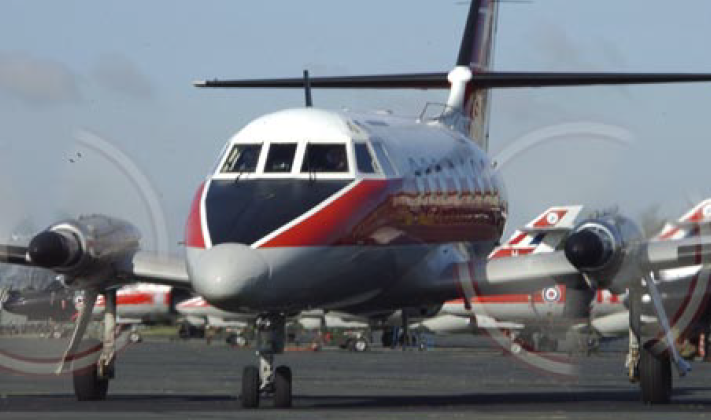
Jetstream TMk1 Aircraft

The Jetstream TMk1 Aircraft is a twin-engine, turbo-prop monoplane, which first entered RAF service in 1973. It is used as an advanced, multi-engine pilot trainer by No 45(R) Squadron, which is based at the RAF College Cranwell, in Lincolnshire. Prior to flying the Jetstream, elementary flying training students who have been selected to fly multi engined aircraft receive an additional 30 hours training on the Firefly multi engine lead-in (MELIN) course, which is also run by No 45(R) Squadron. During the MELIN course, students learn about crew cooperation and procedural flying to prepare them for their advanced flying training on the Jetstream.

A crew of two (student and instructor) operates the aircraft and students learn advanced skills such as twinengine general handling, asymmetric flying, formation flying, low-level flying and airways navigation. On completion of the course students are awarded their pilot’s wings, and then undertake their next flying phase at an operational conversion unit. A variety of courses are available using the Jetstream, based mainly on the student’s previous flying experience. This experience can be as little as 100 hours for a student arriving straight from elementary flying training, to a few thousand hours for a qualified pilot transferring to the multi engine role. In addition to its flying training role, the Jetstream can be used to carry up to 12 passengers or freight.

The Jetstream TMk1 has offered excellent service during its time in the RAF; however, it is now reaching the end of its active life. It is anticipated that it will be replaced in 2004 by the Beech King Air B200.

Jetstream TMk1

Jetstream TMk1 Aircraft
• Twin-engine turboprop used for pilot advanced flying training.
• Operated by a crew of two, with student pilot and instructor flight-deck crew.
• Used to teach multi-engine procedures and airways navigation.
• Can also be used to carry up to 12 passengers or freight.
• Current plans indicate it will be replaced in 2004.

Specifications
Powerplant: Two Turbomeca Astazou Mk16D turboprops
Rating: 968eshp each
Wingspan: 15.86m (52ft 1ins)
Length: 14.36m (47ft 2ins)
Height: 5.33m (17ft 6ins)
Max T/O weight: 6000kg (13,200lbs)
Max speed: 230kts (265mph)
Max altitude: 25,000ft

Jetstream

Dominie TMk1 New Version

Dominie TMk1 Aircraft

The Dominie TMk1 Aircraft, which has been in RAF Service since 1965, is the military training version of the Hawker Siddeley 125 twin-jet business aircraft. A total of nine aircraft are operated by No 55(R) Squadron at the RAF College Cranwell, where they are used to train weapons systems officers and operators, air engineers and air loadmasters in systems management, air leadership, decision making and teamwork to meet the operational demands of the RAF.

In 1996 the Dominie TMk1 aircraft underwent a major upgrade programme, with the installation of a modern avionics suite and a new systems installation and cabin layout, completed under contract by Racal and Marshall Aerospace. The design features included installation of a Super Searcher Ground-mapping Radar, which was fully integrated with the aircraft’s associated radio equipment, avionics systems, multicolour displays and navigation mission-computer.

The Dominie T Mk1 has a maximum crew of six and is generally operated with one pilot captain,
with the remaining aircrew comprising a balance of up to five students and instructors. Training sorties are usually of two to three hour’s duration and are flown in a mixture of regimes dependent on the stage of training and the exercise requirements. These sorties include a mix of low-level flying, maritime operations, radar handling and targeting training. Medium level, high level and general-handling sorties are flown for other training requirements, including trials flights conducted for the Air Warfare Centre at RAF Waddington.

Dominie TMk1

Dominie TMk1 Aircraft
• Used to train weapons systems officers and operators, air engineers and air loadmasters.
• Military training version of the Hawker Siddeley 125 business jet.
• Major upgrade in 1996, incorporating modern avionics, new operating systems and cabin
layout.
• Crew composition of one pilot captain and a total of five students/instructors.
• Mixed sorties of low, medium and high-level exercises dependent on training requirement.

Specifications
Powerplant: Two Rolls-Royce Viper Mk 301 turbojets
Thrust: 3310lbs each
Wing span: 14.33m (47ft 1ins)
Length: 14.48m (47ft 5ins)
Height: 4.87m (16ft 0ins)
Max T/O weight: 21,000lbs
Max speed: 284kts (327mph)
Max altitude: 42,000ft

Dominie TMk1 aircraft

Firefly T67 RAF Training Pilot

Firefly T67 Training Aircraft

The Firefly T67 Training Aircraft, which entered RAF service in 1996, is a two-seat aircraft used at the RAF College Cranwell for training pilots who have completed elementary flying training and have been selected for multi-engine training on the Jetstream TMk1. The Firefly is used on a Multi-Engine Lead-In (MELIN) course, which is an integral part of the role of the Jetstream training squadron, No 45 (R) Squadron. The course gives student pilots an insight into more advanced flying than they encounter on the elementary course and comprises general handling, procedural instrument flying, low-level navigation, formation flying, night flying and an introduction to dual-crew operations.

in Yorkshire, is a single piston-engined aircraft with a 260hp Textron Lycoming engine, which drives a three-blade, constant-speed, composite propeller. Its instrumentation and communications equipment allows it to be flown along airways and the aircraft is cleared for instrument flying and night flying. The Firefly is fitted with side-by-side dual controls, a fixed windscreen and a backward-tilting canopy incorporating direct ventilation windows and fresh-air scoops. The unpressurised aircraft is fully aerobatic and can easily maintain height during an aerobatic sequence. The aircraft also has fuel and oil systems capable of sustaining inverted flight.


The Firefly Aircraft can carry two pilots for over three hours of training. This endurance, coupled with a rapid climb rate of less than 10 minutes to reach 10,000ft, make it an excellent training aircraft.

Firefly Aircraft

Firefly T67 Aircraft

• Excellent performance, handling and visibility, with full aerobatic capability.
• Side-by-side seating, preferred for the basic flying-training role.
• Durable long-life airframe with a rugged, widetrack, fixed undercarriage.
• Low maintenance costs and minimum routineinspection requirements.
• Used for initial pilot training, prior to multiengine advanced training.

Specifications
Powerplant: Textron Lycoming flat sixcylinder engine
Rating: 260hp
Wingspan: 10.72m (35ft 3ins)
Length: 7.48m (24ft 7ins)
Height: 2.29m (7ft 6ins)
Max T/O weight: 1159kg (2550lbs)
Max range: 650nmls
Max speed: 154kts (177mph) at sea level
Max altitude: 10,000 ft

Firefly T67

Saturday, February 19, 2011

FV-107 Scimitar and FV-432 Radar Vehicle British Army Force

FV-107 Scimitar This is basically a Scorpion with a slightly different turret mounting a 30mm Rarden autocannon instead of the 76mm gun. Other than being slightly lighter than the Scorpion and having a smoother-riding suspension and better night vision suite, the Scimitar is identical to the Scorpion. Most British versions are diesel powered, but most export versions are gasoline powered. The Sabre is a Scorpion light tank fitted with the turret of the Fox armored car, along with some upgrades in engine, transmission, smoke grenade launchers, and stowage. This was done to save money on the introduction of a new reconnaissance vehicle. The FV107 Scimitar played an important role during the Falklands War, just like the Scorpion.


FV-432 Radar Vehicle 
This is an FV-432 armored personnel carrier fitted with a counterbattery/ground surveillance radar set. The radar has a ground surveillance range of 10 km and a counterbattery range of 20 km. The radar and the associated takes up almost the entire passenger area of the vehicle, and there is no room for passengers.


FV-432 Radar Vehicle Mortal Carrier

British Produce FV-101 Scorpion MBT Combat Vehicle For Export

Officially named the CVR-T (Combat Vehicle Reconnaissance – Tracked) by the British military, the Scorpion (also known as the Scorpion-76 to distinguish it from later 90mm-armed versions) is a light tank and scout vehicle developed to replace the Saladin armored car. The first versions appeared in British ranks in 1972, and by 1987 over 3500 were built for the British Army and for export.

Most British Scorpions were replaced by the later Scimitar and Sabre, and the Scorpions sold to other countries (especially the turrets, which could be mounted on many different vehicles), but remaining stocks in England were recalled quickly when the war started. Most British and Australian Scorpions have diesel instead of gasoline engines, but most export versions still have the original engine.


There is a hatch on the front left deck for the driver and two hatches on the turret deck for the commander and gunner. Commander’s weapons are not fitted by default, but many such field modifications were carried out during the war. The Scorpion requires a flotation screen to be raised to be amphibious; this takes about 5 minutes.

The FV-101  Scorpion-90 is the standard FV-101 Scorpion light tank, but with a 90mm Cockerill gun instead of the standard 76mm Cockerill. These vehicles were normally built with a diesel engine instead of the normal gasoline engine. They were built primarily for export, and Malaysia, Nigeria, Venezuela, and a few other countries ordered this variant. Twilight 2000 Notes: They were in official service with 15 countries by the time of the Twilight War; one unusual user was the US Army and Marines, who ordered about 40 of them before the war for evaluation purposes, then put them to use during the war with about 12 going to the Marines and the other 28 going to the US Army’s 9th Infantry Division.

An unusual customer for the Scorpion-90 was the US Marines, who had a number of them on loan from Britain before the Twilight War for evaluation as a fire support vehicle; when the Marines were deployed to Norway, they bought the test vehicles and ordered a few more for use in that campaign.

Sunday, December 12, 2010

English Army Made Chalanger 2 Main Battle Tank 120mm Rifled Gun

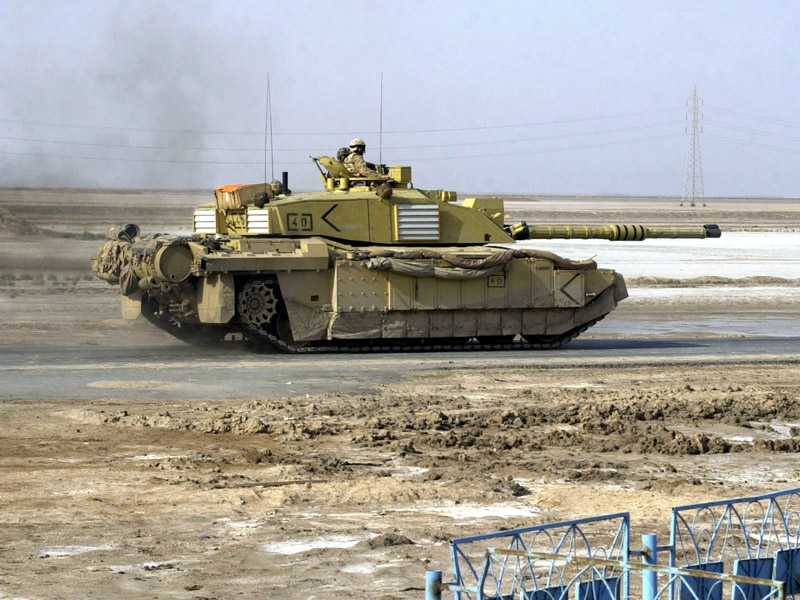
Chalenger-2 Main Battle Tank

The UK’s only MBT, the Challenger 2 has a solid reputation and reportedly performed very well during recent combat operations in Iraq. Receiving the last of its 386 vehicles in February 2002, the British Army intends to keep its Challenger 2s in service until at least 2025. Oman operates 38 Challenger 2s. Protection: There are no known accounts of any Challenger 2 being penetrated by enemy fire in Iraq, except for a blue-on-blue incident where a Challenger 2 crew mistook another Challenger 2 for enemy.

Based on photographs and footage of Challenger 2s operating in Iraq fitted with additional armour, the British
Army clearly feels the need to improve the protection levels of the vehicle’s baseline armour. This add-on armour consists of explosive reactive armour ‘bricks’ over the nose (known as ROMOR A) and ceramic/composite passive armour panels on the glacis plate and hull sides. It is the same armour kit installed on British Challenger 1 tanks during the 1990–91 Gulf War. Presumably this provides an even higher level of
protection on top of the Challenger 2’s still largely classified Dorchester baseline armour (a more advanced form of the composite Chobham armour) in those areas of the tank most susceptible to enemy fire. The weight penalty this extra armour incurs is estimated at several tonnes.


Firepower: The Challenger 2 is armed with a L11 120mm rifled gun. While a superbly lethal weapon in itself, the British Army now acknowledges the drawbacks of adopting rifled tank gun technology, an area where little or no research and development resources are being directed and ammunition is becoming increasingly expensive. In an effort to achieve better interoperability with its allies (particularly the US), the British Army seems certain to retrofit its Challenger 2 fleet with a 120mm smoothbore gun. However, those Challenger 2s to be made surplus under the current transformation plans will still have the 120mm rifled gun, leaving the new owners with an ordnance orphan. The total number of 120mm rounds stowed onboard the Challenger 2 is 50.

Mobility: From all accounts the Challenger 2 is a highly mobile tank, with no known deficiencies in this area. Its power-to-weight ratio is sufficient to enable all-up weight to be increased (due to the fitting of extra armour) without a significant degradation in performance. It must be said that like the M1 Abrams and Leopard 2, the modest maximum range of the Challenger 2 is a limiting factor in its operation as part of a fast moving and far-ranging armoured battlegroup. For the two former vehicles this is another leftover from the tank warfarecentric approaches taken to design of Western MBT during the 1970s and 1980s. But with a design history dating back only about 15 years, the Challenger 2 should possess better endurance than it does.

 
content="KxPS6GPOk1jXixOC5uWVt4sKw8A" />