Showing posts with label RUSSIA AIR FORCE. Show all posts

Thursday, July 26, 2012

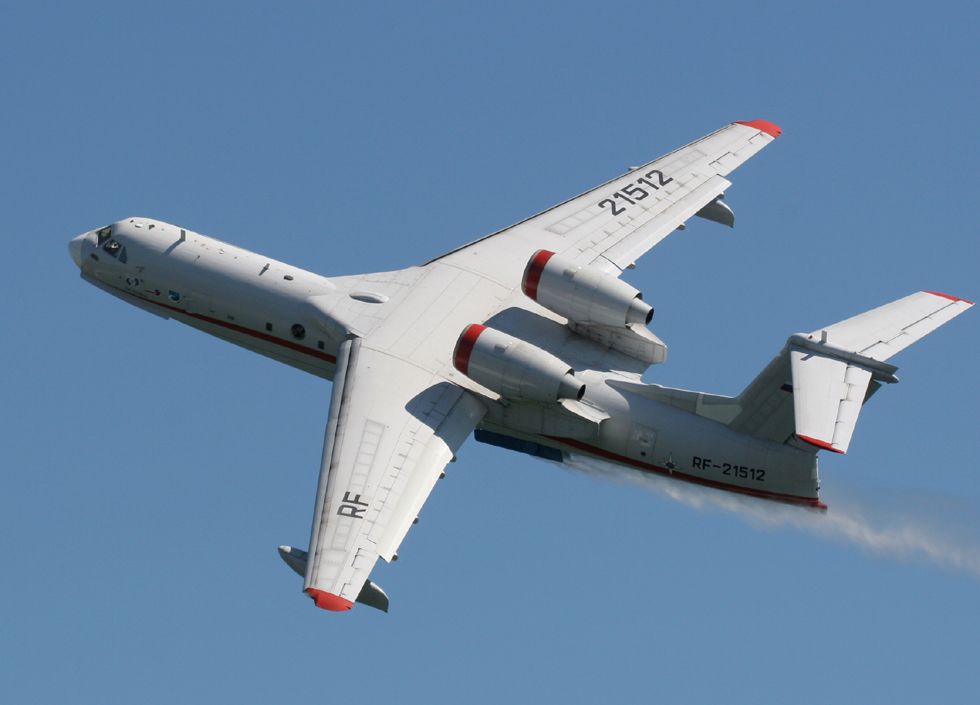
Be-200 Amphibian Aircraft

The Be-200 amphibious aircraft is designed to fight forest fires, to transport passengers and cargoes, to carry out SAR operations. The Be-200 aircraft’s integrated flight navigation and
communications systems enable operations by day and night, in any weather conditions, and in any season. The aircraft can be flown from sea and internal water strips at least two metres deep.


The Be-200 aircraft fire-fighting version is designed to dump water on fire sites from the onboard tanks. The tanks are emptied simultaneously, or one by one in a crew-selected sequence. Given an airfield-to-fire range of 100 km and an airfield to reservoir range of 10 km, the Be-200 is capable of delivering up to 270 tons of water to the fire zone without refuelling. Its high climb rate is a most valuable characteristic for firefighting in mountainous terrain and water scooping/dumping near obstacles, such as trees or hills. If fitted with special dispersers, the Be-200 can also be employed to put out burning fuel, extinguish ship fires, and disperse oil absorbers in operations to remove oil film from water surface.

Be-200 Amphibian Aircraft

The Be-200 aircraft SAR version is designed for visual and instrumental search, rescue and evacuation of casualties in areas of man-made and natural disasters. This version is fitted with maritime search and surveillance equipment. The aircraft is capable of transporting up to 50 rescue troops, or up to 60 seated casualties, or up to 30 stretcher casualties. The Be-200 transport version is capable of transporting up to 7.5 tonnes of cargo. The cargo hold is fitted with all the necessary equipment for transporting cargoes in bulk or on standard pallets. The crew can convert the aircraft into a passenger version within one hour. Depending on the passenger cabin configuration, the aircraft is capable of transporting 32 to 64 passengers.

Be-200 Amphibian Aircraft
  
The Be-200 passenger/cargo version is capable of simultaneously transporting 19 passengers and up to 3,000 kg of cargo. The administrative version can transport 18 to 24 passengers.

Be-200 Aircraft

Be-200 Aircraft Specifications
Length, m 31.43
Wing span, m 32.78
Parked height, m 8.90
Cargo hold dimensions, m:
length 17.00
height 2.60
width at floor 1.90
Max take-off weight, kg 43,000
Tank capacity, cu. m:
water 12.00
chemicals 1.50
Max cruising air speed, km/h 710
Service ceiling, m 8,000
Max range, km 3,600
Take-off run, m:
water 1,000
surface 700
Landing roll, m:
water 1,300
surface 950
Sea State 3
Wave height, m up to 1.2
Water intake time when gliding, sec 14
Powerplant 2 x D-436TP turbofans
Crew 2
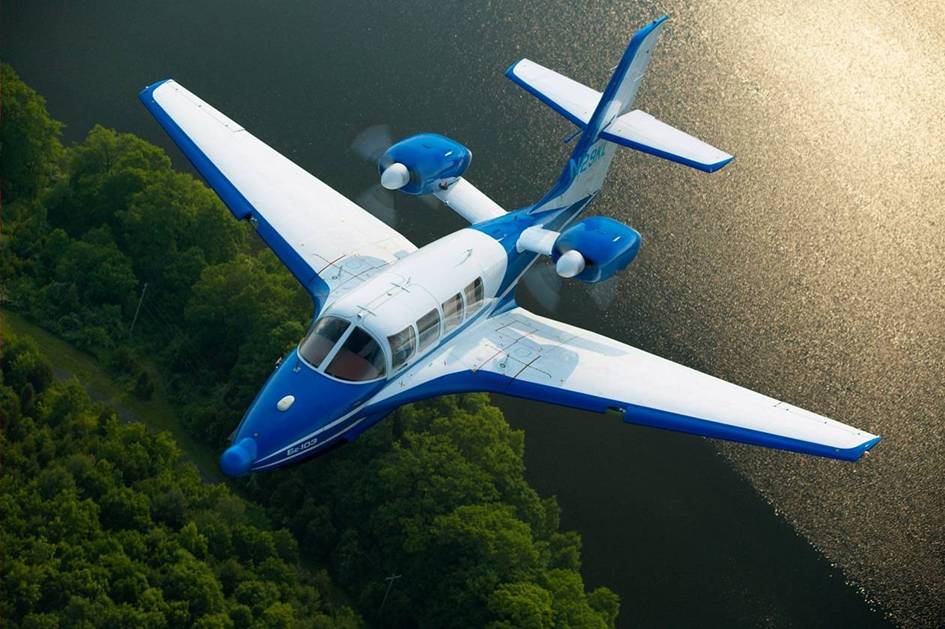
Be-103 Aircraft Amphibian

The Be-130 aircraft amphibian light amphibious aircraft is designed for passenger and cargo transportation; medical evacuation; fire prevention, surveillance, and maritime environmental monitoring operations; recreational flights; and agricultural applications. The Be-103’s amphibious capability allow it to operate in areas with sufficient water surface (rivers, lakes) and remote regions where runway construction is either impossible or economically unfeasible.

Certificated in compliance with the AP-23 requirements, the Be-103 aircraft also got the ICAO certificate in Dec. 2001. The aircraft is fitted with integrated flight navigation and communications systems enabling operation in adverse weather conditions, by day and night. On customer request the aircraft can be fitted with autopilot, satellite navigation system, and weather radar. All versions can be equipped with a copilot (instructor) flight control station.

Be-103 Aircraft Amphibian
Be-103 Aircraft

Be-103 aircraft Specifications
Length, m 10.65
Wing span, m 12.72
Height, m 3.757
Cargo hold dimensions, m:
length 3.65
height 1.23
width 1.25
Take-off weight, kg 2,270
Payload, kg 385
Max air cruising speed, km/h 260
Service ceiling, m up to 3,000
Max range, km 1,250
Take-off run (water/surface), m 440/310
Landing roll (water/surface), m 320/240
Wave height, m up to 0.5
Powerplant 2 x TCM-IO-360ES
piston engines
Crew 1
Passenger seats 5

Su-80GP Aircraft Russian Transport

Su-80GP Aircraft Information and Pictures

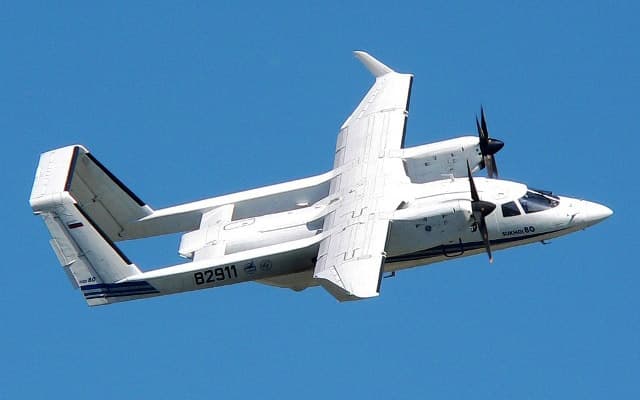
Sukhoi Su-80GP Aircraft
 
 The Sukhoi Su-80GP Aircraft multi-purpose transport aircraft is designed to transport passengers and cargoes in the pressurised cargo hold. The aircraft can operate in any geographic area by day and night, in fair and adverse weather conditions. The Su-80GP can also be employed for medical evacuation, environment monitoring, mapping and aerial photography, patrol/transport, training, and airmobile missions.

Sukhoi Su-80GP Aircraft

The Su-80GP Aircraft features high cost/efficiency of passenger and freight transportation. The ramp in the rear fuselage facilitates cargo loading/unloading. The integrated avionics suite provides flight control and navigation, monitoring of aircraft systems and equipment, and presentation of data on colour LCDs. The Su-80GP can be operated autonomously for 50 flight hours, or for 15 days, from nonequipped airfields and soil runways, in the nearground air temperatures ranging from -50oC to +45oC.

Su-80GP Aircraft

Su-80GP Specifications
Length, m 18.26
Wing span, m 23.17
Parked height, m 5.52
Max take-off weight, kg 14,000
Max payload, kg 3,300
Max cruising air speed, km/h 470
Max altitude, m 7,600
Range, km:
with 30 passengers 1,400
with 1,950-kg payload 2,450
Take-off run, m 840
Landing roll (with thrust reversal), m 460
Powerplant 2 x CT7-9B
turboprops
Crew 2
Passenger seats 30

Antonov An-38 Aircraft Infomation and Pictures

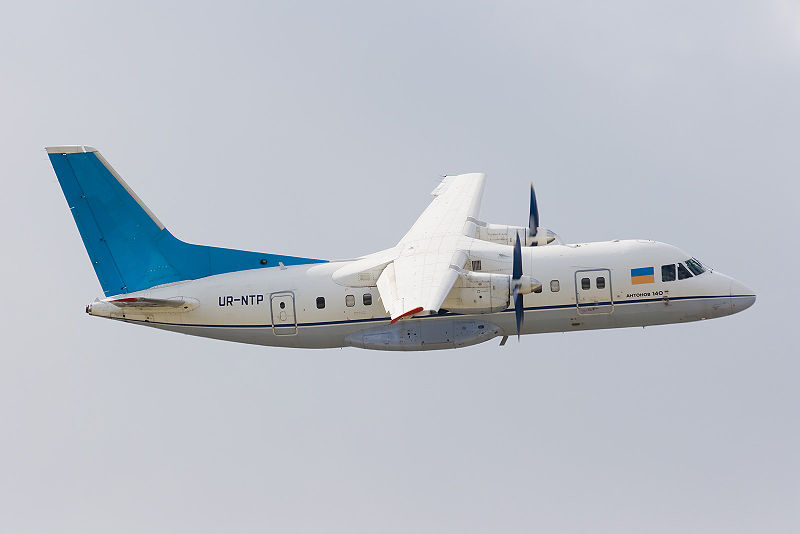
The An-38 transport aircraft is designed to transport passengers and cargoes (in containers too) on local routes. The An-38 can also be employed for aerial photography, geological surveys, patrol missions, fire-fighting operations, personnel and cargo airdrops, maritime reconnaissance, and medical evacuation. Different versions may have different passenger/cargo combinations. Cargoes up to nine meters long can be loaded through the rear cargo hatch.

The An-38 can be operated from short unpaved and ice/snow-covered runways, from mountainous airfields situated at up to 2,600 m above the sea level, and is operational within
the ambient temperature range of -50o to +45oC. The integrated flight navigation system enables all weather, day and night operation. 


Antonov An-38 Aircraft

The aircraft is maintained on condition, without overhauls throughout the entire service life. The An-38 is certificated in compliance with the Russian AP-25 flight standards. The An-38-100 version is powered by the An-38-100.

An-38 Aircraft
An-38 transport aircraft

Antonov An-38 Specifications
Length, m 15.67
Wing span, m 22.063
Parked height, m 5.050
Cargo hold dimensions, m:
length 9.00
height 1.60
width at floor 1.55
Max take-off weight, kg 9,500
Max payload, kg 2,500
Cruising speed, km/h 340-380
Cruising altitude, m 3,000-4,200
Range (H=3,000 m, ISA), km:
with max payload 990
with max fuel load 1,790
Runway length required, m 895
Powerplant 2
TPE-331-14GR-801E turboprops
Crew 2
Passenger seats 27

IL-76P Fire Fighting Aircraft

The IL-76P aircraft is designed to fight fires by dumping extinguishing liquids on fire areas. The liquids dispenser can be mounted on any Il-76 transport without its extra retrofitting. Two VAP-2 tanks contain 42,000 litres of water or special extinguishing liquids. The tanks are attached to the cargo hold floor by the organic mooring chains. A four-person team can load and moor one tank within 1.5 to 2 hours. It takes 10-12 minutes to fill the VAP tanks with the extinguishing liquid.


The IL-76P aircraft is capable of dumping 40,000 litres of water from an altitude of 50 m in four seconds. Dumped consecutively or simultaneously from two tanks at the airspeed of 280 km/h and the altitude of 80 m, water covers an area of 600x80 m with the density exceeding five litres per square metre in the centre and gradually decreasing towards the periphery. In about eight seconds all water can be dumped from both tanks.

IL-76P Aircraft

One IL-76P employed intermittently for three to four hours against a strong ground-level forest fire on an area of 50 hectares can reduce firefront expansion rate by two to three times. The most efficient technique consists in employing two to three IL-76P aircraft in turns to deliver the OS-5 extinguishing liquid. Firefighting operations can be started by new line unit crews after only a short training course.

IL-76P Aircraft

IL-76P Specifications
Water dispersing speed, km/h 260-400
Water dispersing altitude, m 50-100
VAP tanks total capacity, m3 40,000
Covered zone length, m
with the extinguishant density
on the ground of over 2 L/m2 450-900

IL-76MD and IL-76MF Aircraft Russia

The first generation Russian made IL-76MD aircraft and IL-76MF aircraft medium range military transport aircraft are designed to airdrop troops, transport ground forces and materiel (including medium-weight tanks) with crews, deliver urgent cargos to troops, and transport casualties.


The IL-76MD medium transport aircraft is capable of airlanding combat materiel (with crews), cargoes, or fuel in special tanks in the pressurised cargo hold. The twindeck version of the aircraft is capable of accommodating 225 personnel (145 people - without the second deck). Its medevac modification can evacuate 114 casualties. The IL-76MF is a derivative of the IL-76MD, with a new engine control system. The communications instrument panels and controls have been rearranged to enable flights without the radio operator. The crew has been cut down to four people - two pilots, navigator, and flight engineer.

IL-76MD aircraft

The IL-76MD and IL-76MF aircraft avionics ensure airdropping by day and night, in good and adverse weather, in hostile air defence environment. The avionics include navigation/targeting system, longrange navigation system, satellite navigation system (on customer request), radio communications equipment, mid-air collision avoidance system, and flight data recorder. The aircraft can carry four UAK-10 or nine UAK-5 aircraft containers, or four UUK-20 ground/sea containers.

 IL-76MF Aircraft Russia

The IL-76MF is capable of transporting up to 305 persons (in the twin-deck version), or 150 casualties, or military hardware with crews, or fuel in special containers, as well as airdropping troops (186 persons), materiel and cargoes. Both aircraft can be operated from soil airfields, and are superior to foreign counterparts in terms of cargo hold volume and autonomous operation capability.

IL-76MF Aircraft Russia

IL-76MD and IL-76MF Specifications
                                                  IL-76MD                           IL-76MF
Length, m                                    46.60                                   53.19
Wing span, m                              50.50                                   50.50
Parked height, m                         14.42                                   14.42
Cargo hold dimensions, m:
length                                         25.54                                   31.14
height 3.40 3.40
width at floor                             3.45                                      3.45
Max take-off weight, kg             190,000                                210,000
Max payload, kg                       47,000                                  60,000
Cruising air speed, km/h            780-800                                780-800
Cruising altitude, m                   9,000-12,000                         9,000-12,000
Service range, km:
with max payload                    4,200                                     4,200
with 40,000 kg                        7,200*                                   5,400
Take-off run, m                      1,700                                     1,800
Landing roll, m 1,000 990
Powerplant                             4 x D-30KP-2                        4 x PS-90A
                                              turbofans                               turbofans
Crew 6 4

Wednesday, July 25, 2012

IL-78MK Aircraft Refuelling Tanker

IL-78MK Convertible Flight Refuelling Tanker

The IL-78MK Aircraft flying tanker is designed for air refuelling of tactical and heavy aircraft, and also
for ground refuelling of tactical aircraft. Air refuelling can be carried out by day and night with visual approach and contact. The IL-78MK is a derivative of the IL-78 aircraft providing increased fuel transfer at refuelling ranges. It is capable of transferring up to 74,000 kg of fuel at a refuelling range of 1,000km, and up to 30,000 kg at 3,500 km. The IL-78MK can refuel one heavy aircraft from the rear fuselage refuelling pod, or two tactical aircraft from the wingtip refuelling pods.

By removing the fuselage fuel tanks and refuelling pods, the IL-78MK aircraft can be converted into a transport version capable of airlifting up to 70 people or up to 48 tonnes of cargo.

IL-78MK Aircraft Refuelling Tanker
IL-78MK Aircraft

The IL-78MK Aircraft mounts special equipment for in-flight and ground refuelling. Two auxiliary removable fuel tanks with a total capacity of 45,928 litres are mounted in the fuselage, and two standard UPAZ refuelling pods at the wingtips. The PAZ-1M refuelling pod is carried on a special portside pylon in the rear fuselage. The aircraft can be fitted with an upgraded refuelling system adapted to foreign aircraft. In place of the standard pressurized gunner station in the rear fuselage a refuelling operator station with refuelling pod controls is arranged.

The aircraft is maintained with the use of the organic ground equipment of the IL-76MD aircraft, auxiliary equipment for hoisting the refuelling pods to the underwing and fuselage pylons, containers with ground refuelling hoses, and the refuelling pod maintenance suite.

IL-78MK

IL-78MK Aircraft Specifications
Length, m 46.60
Wing span, m 50.50
Parked height, m 14.76
Max take-off weight, kg:
concrete runway 210,000
soil airfield 157,500
Max landing weight, kg:
concrete runway 155,000
soil airfield 138,000
Max payload, kg:
concrete runway 43,000
soil airfield 33,000
Max transferred fuel weight, kg 74,000
Cruising air speed, km/h 750-840
Cruising altitude, m 8,000-11,000
Refueling air speed, km/h 440-600
Refueling altitude range, m 2,000-9,000
Ferry range, km 9,500
Take-off run (max take-off weight), m 2,200
Powerplant 4 x D-30KP-2 turbofans
Crew 7

IL-114MP Multi Purpose Patrol Aircraft

The IL-114MP multi purpose patrol aircraft is designed for aerial patrolling in littoral and blue water zones, and provides detection, identification, tracking and destruction of underwater and surface targets. The IL-114MP gathers electronic reconnaissance data on underwater and surface vessels. It can also be employed in SAR operations in emergency cases. The crew locates missing persons with the help of the onboard detection systems, and airdrops survival equipment.


The IL-114MP Patrol Aircraft is capable of engaging enemy surface vessels from a standoff range. Its ASW capabilities include submarine detection, tracking and engagement, as well as planting of linear mine barriers. The avionics suite includes radar, sonobuoys, magnetic anomaly detection equipment, managing computer system, IR and television imaging system and electronic reconnaissance system. Modular design of the ASW system enables further build-up of additional equipment, including installation of any equipment or subsystems meeting the MIL-STD-1553B standard.

 IL-114MP Patrol Aircraft
 IL-114MP Aircraft

IL-114MP Specifications 
                                        IL-114P                                IL-114MP
Length, m                           27.40                                       29.654
Wing span, m                     30.00                                       30.00
Height, m                           9.186                                       9.186
Max take-off weight, kg      26,000                                     30,000
Patrol speed, km/h             350-400                                   350-400
Patrol altitude, m               100-8,000                                 500-8,000

Patrol duration at a range
of up to 300 km, hrs          8-12                                         9-12*
Take-off run, m                 800                                          1,300
Landing roll, m                 500                                           1,000
Powerplant                       2 x TV7-117                              2 x AI-20D
series 2 series 5
turboprops turboprops
Crew                               2                                                2
Operators                       2-4                                              2-4

IL-114P Patrol Aircraft

The IL-114P patrol aircraft is designed for aerial patrolling of exclusive economic zones, ports and sea coast, as well as air pollution control and environmental monitoring. The IL-114P searches for and detects surface vessels, identifies and locates them, determines their movement parameters; reveals cases of state border/economic area trespassing and provides target designation of trespassers. The aircraft can also be used for search, rescue and evacuation of casualties, and cargo transportation.

IL-114P Patrol Aircraft

The IL-114P Patrol Aircraft is capable of autonomous operation in adverse weather conditions, day and night, in a variety of climates. The aircraft and its systems are operated according to the "on-condition" maintenance scheme. The onboard electronic equipment includes surveillance radar, IR and television imaging systems, managing computer system, recording equipment, communication and automatic data transmission equipment, and environmental monitoring and photography system. External equipment includes searchlight and loudspeaker pods, gun pod, and survival equipment containers.

MiG-AT Combat Aircraft Trainer

The MiG-АТ Combat aircraft trainer is a classic configuration monoplane with a low mid-wing, two-seat tandem cockpit and two bypass turbojet engines. The aircraft’s aerodynamic layout and parameters allow it to perform flights practically in all subsonic flight modes characteristic of modern and prospective combat aircraft. Two Larzac 04R20 engines provide high steady-maneuvering loads, takeoff characteristics and rate of climb.

MiG-AT Combat Aircraft Trainer

The MiG-AT aircraft is equipped with integrated fly-bywire control system with digital and analogue parts redundancy. It provides required characteristics of stability and controllability, automatic limitation of angle of attack; engine thrust control, pre-selected radio altitude hold, spin recovery and bringing of the aircraft to straight and level flight.


The MiG-AT combat trainer ensures effective high-quality preparation of flight personnel within the short time thanks to its design simplicity, high reliability of its airframe, power plant and systems, long service life and low-cost life cycle, high maintainability, and excellent flight characteristics. An interactive training system and simulators are offered for on-ground formation of flying and technical personnel.

MiG-AT aircraft

MiG-AT Aircraft Specifications
Weight, kg:
normal/max take-off 5,210/8,150
max fuel
in internal tanks 1,680
in external tanks 2 х 470
Powerplant 2 х Larzac 04R20
Take-off thrust (ISA), kgf 2 х 1,440

Airspeed, km/h:
max level speed 850
take-off (with full fuel load) 183
landing 175
Max flight altitude, m 14,000
Max flight range, km 2,000
Operational g-load +8/-3
Service life, flying hrs 15,000
Dimensions:
length 12.01
wing span 10.16
height 4.01

MiG-AT

Yak-130 Combat Aircraft Trainer

The Yak-130 Combat Aircraft Trainer is designed for basic and advanced training of military flight school cadets, for retraining pilots to fly combat fighters in manoeuvre units, and as a light combat aircraft. The Yak-130 trainer is one of the major components of the integrated flight training system, which comprises ground training assets, simulators, a basic training aircraft, and a training management system. All these components are combined by common open-architecture software allowing further build-up of the system’s capacities.

Yak-130 Combat Aircraft Trainer

The Yak-130 aircraft trainer is capable of providing sufficient pilot training to fly any fourth- or fifthgeneration jet fighter, including the Su-30 and MiG-29 family aircraft, as well as Mirage 2000, F-15, F-16, Eurofighter Typhoon, F-22, and F-35 warplanes. The Yak-130’s high versatility facilitates its integration into different national air forces, as far as its technical specifications and operational characteristics are concerned.

The Yak-130 is fitted with a digital fly-by-wire system, which functions as an active flight safety
system and allows the instructor to adjust stability and controllability parameters to those of the aircraft being simulated. The Yak 130 aircraft cockpits are equipped with electronic displays completely identical in layout to those of fifth-generation aircraft. The aircraft can carry an integrated Osa or Kopyo radar, or an electro-optical station. If used jointly with the Pchela RPV, the Yak-130 can deliver standoff pinpoint strikes demonstrating increased combat efficiency, especially in mountainous areas.

Yak-130 aircraft trainer

YAK- 130 Armament
Eight underwing pylons and one ventral pylon are used for carrying up to 3,000 kg of payload such as air-to-air and air-to-surface missiles, rockets, bombs, external fuel tanks, and specialised (weapon guidance, reconnaissance, ECM) pods. It is equipped with the refuelling probe considerably enhancing the aircraft combat capabilities.

Yak-130 Specifications
Length, m 11.493
Wing span, m 9.72
Height, m 4.76
Take-off weight, kg:
max 9,000
normal, trainer version 5,700
Max combat load, kg 3,000
Max air speed, km/h 1,060
Service range, without external fuel tanks, km 2,000

Service combat radius, km:
without external fuel tanks 525
with external fuel tanks 915
Operational g-load +8/-3
Flight attack angles, deg up to 40
Take-off speed (trainer version), km/h 195
Landing speed (trainer version), km/h 180
Powerplant 2 x AI-222-25
or DV-2S turbofans
Crew 2

Yak-130 aircraft

Tuesday, July 24, 2012

MiG-29M and Mig 29M2 Multirole Fighter

The MiG-29M Fighter and MIG 29M2 multirole fighter is designed to defeat air and ground/surface targets by day and night in fair and adverse weather conditions, and in complex jamming environment. The aircraft features high combat effectiveness, outstanding flight performance characteristics, and easy operation.

Thanks to a second crewmember (on M2 version), certain combat missions, especially attacks against ground targets, operations within a group of MiG-29s, operations in jamming conditions, can be accomplished more effectively. The aircraft is equipped with an in-flight refuelling system. The MiG-29M aircraft is a new-generation MiG-29 aircraft. It differs from the latest MiG-29SMT upgrade by the increased internal fuel load, upgraded engine with increased thrust and smokeless combustion chamber, digital multichannel fly-by-wire control system, stores stations number increased to 8. The aircraft has a reinforced landing gear. Its flight life and service life are also increased to 6,000 flying hours and 40 years correspondingly. 

MiG-29M and Mig 29M2 Fighter

The aircraft is maintained on condition. The MIG-29M and MIG 29M2 fighter is unified with the MiG- 29K/KUB by 95%.

The MiG-29M/M2 Fighter avionics suite has an open architecture based on the MIL-STD-1553B multiplexing bus enabling integration of the onboard equipment and weapon systems of both Russian and foreign origins at customer request. The MiG-29M aircraft is equipped with the advanced weapons control system including the new Zhuk-M multi-function radar with enhanced operational range, multi-channel fire capability and modern air-to-ground modes of operation. The optical locating station and helmet-mounted targeting system make the avionic suite of the aircraft functionally complete. Integration of the targeting and navigational equipment on the basis of the modern computing system has helped to notably increase target acquisition range and sighting angles, as well as the number of targets simultaneously engaged (up to four).

Mig 29M2 Fighter

MiG-29M and Mig 29M2 Armament
The MiG-29M and Mig 29M2 weapons control system manages the RVV-АЕ, R-27ER1, R-27EТ1, R-27R1, R-27Т1, R-73E air-to-air guided missiles, Kh-29T(ТE), Kh-29L, Kh-31А, Kh-31P, Kh-35E air-to-surface guided missiles, КАB-500Кr, КАB-500L corrected bombs, unguided rockets, bombs and the GSh-301 built-in gun. An interactive training system and simulators are offered for on-ground formation of the flying and technical personnel.

Mig 29M2 Fighter

MiG-29M Fighter and MIG 29M2 specifications
                                          MiG-29М                    MiG-29М2
Crew                                       1                                    2
Take-off weight, kg:
normal                                17,500                            17,800
max                                    22,400                            23,700
Powerplant                                       RD-33МК
Afterburning thrust, kgf                     2 х 9,000
Max operational g-load                        9.0
Max airspeed, km/h:
at ground-level                                   1,500
at high altitude                  2,400                                2,200
Service ceiling, km                             17.5
Flight range, km:
w/o EFT /
with 3 х EFT                 2,000/3,200                      1,700/2,700
with 3 х EFT and one
in-flight refuelling, kg                  more than 5,500
Max external payload, kg            6,500

Mig 29K and Mig 29KUB Fighter

The MiG-29K and MIG 29KUB Fighter ship-borne multirole fighter is designed to perform naval groupings’ air defence tasks, to gain air superiority, to engage surface and ground (coastal) targets, including small-size ones, with precision-guided weapons, by day and night, in any weather conditions. The fighter is optimized for basing on aircraft carriers of medium displacement.


The MiG-29K fighter is a new-generation MiG-29 Fighter. It differs from the latest MiG-29SMT Fighter upgrade by increased internal fuel load, upgraded engine with increased thrust and smokeless combustion chamber, digital multi-channel fly by wire control system, and stores stations number increased to 8. For operations on the aircraft carrier the aircraft has an arrester hook and a reinforced landing gear. Its flight life and service life are also increased to 6,000 flying hours and 30-40 years correspondingly. The aircraft is maintained on condition.

Mig 29KUB Fighter

The Mig 29K and Mig 29KUB aircraft has an open-architecture avionics suite based on the MIL-STD-1553B multiplexing bus enabling integration of onboard equipment and weapon systems of Russian and foreign origins at customer requests. The MiG-29K aircraft is equipped with the modern weapons control system including the Zhuk-ME new multifunctional radar with enhanced operational range, multi-channel fire capability and modern air-to-ground modes of operation. The optical locating station and helmet mounted targeting system make the avionic suite of the aircraft functionally complete. Integration of the targeting and navigational equipment on the basis of the modern computing system has resulted in much greater target acquisition range and sighting angles while the number of targets simultaneously engaged is increased to four.

Mig 29KUB Fighter

Variants Mig 29KUB Fighter
The MiG-29KUB ship-borne combat trainer is designed for naval aviation pilots’ training and mastering flying skills, monitoring their techniques of flight management, navigation and combat employment, as well as pilot transition to the MIG-29K aircraft. In terms of its combat mission, the MiG-29KUB performs the entire scope of MiG-29K assigned combat tasks. The MiG-29KUB has a high degree of design commonality with the MiG-29K aircraft. It is also equipped with the Zhuk-ME airborne radar and carries the same weapons mix. The aircraft can be a baseline model for creation of reconnaissance, target designation, electronic countermeasures, and flight refuelling modifications.

The MiG-29K aircraft and MiG-29KUB aircraft have an integral in-flight refuelling system and are equipped with the UPAZ suspended universal refueling unit providing for in-flight refuelling of both internal and external fuel tanks. An interactive training system and simulators are used for on-ground formation of the flying and technical personnel.

MiG-29K fighter
MiG-29K fighter

Armament Mig 29K and Mig 29KUB Fighter
The weapons mix of the aircraft includes the RVV-AE and R-73E air-to-air guided missiles,
air-to-surface guided weapons, such as the Kh-35E and Kh-31A anti-ship missiles, Kh-31P
anti-radiation guided missiles and KAB-500Kr guided bombs. Unguided weapons include the
FAB-500 air bombs and rockets. The aircraft is armed with the GSh-301 built-in gun.


MiG-29SE Fighter Made Russian

MiG-29SE Fighter

The MiG-29SE light tactical fighter is designed for engagement of air targets, as well as ground and maritime targets. The fighter features high combat effectiveness, outstanding maneuverability, high reliability, and flight safety. The MIG-29SE is simple and economical in operation, being maintained
on condition. It has an increased flight life in excess of 3,000 flying hours and a service life of 30 years with possible prolongation.

The Mig 29SE Fighter or aircraft is equipped with the integrated weapons control system including the NO19-ME upgraded radar ensuring multiple target engagement with the RVV-AE air-to-air missiles,
optical locating station, and helmet-mounted target designation system. The aircraft is fitted with an in-flight refuelling system allowing it to receive fuel from both Russian and foreign air tankers.

MiG-29SE Fighter

An interactive training system, simulators and the MiG-29UB aircraft are used for onground formation of the flying and technical personnel. The aircraft can be equipped and armed with systems and munitions of foreign origin. Armament The upgraded weapons system includes the R-27ER1, R-27EТ1, R-27Т1, R-27R1, R-73E air-to-air missiles, GSh-301 built-in gun, air bombs and rockets.

MiG-29SE Fighter

MiG-29SE Basic specifications
Take-off weight, kg:
normal 15,300
max 20,000
Powerplant RD-33
afterburning thrust, kgf 2 х 8,300
Max g-load 9.0
Max airspeed, km/h:
ground-level 1,500
high-level 2,400
Service ceiling, km 17.75
Flight range, km:
w/o EFT / with 3 x EFT 1,500/2,900
with 3 х EFT and one in-flight
refuelling more than 5,400
Max external payload, kg 4,500

Mig 29 Fighter and MiG-29UB Fighter

The Mig 29 Fighter Mig 29 Fighterand MiG-29UB Fighter is designed for instructing and training pilots to fly the aircraft, intercept air targets and engage air and ground targets within the MiG-29’s altitude/airspeed combat envelope. It can also perform separate combat missions autonomously and within a MiG-29s group. The MiG-29UB differs from the combat fighter mainly by its two-seat cockpit, absence of the targeting radar and R-27R1 guided missiles.

The Mig 29 and Mig 29UB aircraft and its engines, flight-navigation system, armaments, communication aids and in-cockpit warning systems can be managed from both cockpits. The instructor’s cockpit accommodates a failures simulation console and a switching console to imitate operation of the radar targeting system during air target interceptions with simulated R-27R1 missiles. An interactive training system and simulators are used for on-ground formation of the flying and technical personnel.

Mig 29 Fighter

The MiG-29 light tactical fighter is designed to intercept and defeat air targets day and night under normal and adverse weather conditions in free air space and against ground surface in natural clutter and ECM environment, using airto air missiles with semi-active radar/IR seekers, as well as to destroy ground targets with unguided weapons in conditions of visual flight rules. It operates over friendly territory and in the near-operative and tactical zones of the enemy.


The variant Mig 29 Fighter features high combat effectiveness, outstanding maneuverability, high reliability and flight safety, and easy operation. The MiG-29 and MiG-29UB aircraft are baseline models for upgrades of varied complexity, including the MiG-29SE, MiG-29SMT, MiG-29UBT modifications. The aircraft has its air intakes closed to prevent foreign object damage of engines when moving on the ground, especially on poorly organized airfields and aprons.

MiG-29UB Fighter

The Mig 29 aircraft weapons control system consists of a radar targeting system with the N-019 radar and an electro-optical targeting/navigation system with an air target acquisition, lock-on and tracking optical locating system including an IR search-and-track system and a laser rangefinder, as well as a helmet-mounted target designation system.


A unique avionic system has been created thanks to the radar, optical locator and helmetmounted sight data fusion and algorithms integration. Data exchange between the optical locator and radar has helped to notably enhance noise immunity of the aircraft targeting system as a whole. The MiG-29 helmetmounted target designation system is used for quick locking-on to air targets visually detected by the pilot through the cockpit glass allowing him to designate a target within one second to the radar, optical locating station or directly to the missile seeker, with an accuracy adequate enough for effective weapons employment.


Mig 29 Fighter


Mig 29 Fighter Armament
The aircraft weapons include the GSh-301 built-in gun, as well as the R-27R1 and R-73E air to air guided missiles, rockets and bombs suspended under six external stores hardpoints.

Monday, July 23, 2012

MiG-31E Fighter Armament

The basic MiG-31E Fighter weapons mix includes four R-33E long-range missiles carried on a semi-recessed pylon under the fuselage, and R-40TD-1 and R-60MK missiles under the wing. The aircraft also has one GSh-6-23M six-barrel gun with the 260-round ammunition allowance.


The Armament">MiG-31E Fighter Armament weapons control system is built around a phased array radar. It can simultaneously track up to 10 air targets and attack up to four. The surveillance, tracking and attack envelope is limited by ± 70 deg in azimuth and +70…-60 deg in elevation. The radar can detect a target with a 19 sq.m radar cross section at 200 km. The WCS also includes an IR system providing concealed target acquisition and designation, and operation in severe ECM environment.


MiG-31E Fighter

The aircraft provides excellent interoperability within a group owing to the onboard radar and data transmission equipment ensuring automatic data exchange between four interceptors at a range of up to 200 km. The group leader assigns targets to his wingmen. A group of four MiG-31Es is capable of controlling an 800-900km-long frontline. The aircraft features EW assets operating both in the radar and IR frequency bands.

The MiG-31E Fighter interceptor is designed to intercept and destroy air targets at low and
high altitudes, in the forward and aft hemispheres, both in the lookup and lookdown modes, in all weather conditions, despite target manoeuvring and active/passive ECM. The aircraft can operate alone or within a group in the continuous or discrete field of control and guidance commands. It is capable of semiautonomous or fully autonomous operations against manoeuvring and ECM-protected targets.

MiG-31E Fighter

The MiG-31E Fighter is designed for employment as part of the nation’s air defence system. It is capable of long-endurance patrolling and engaging any airborne threats, including cruise missiles, helicopters and highaltitude reconnaissance aircraft. The MiG-31E can interoperate with various aircraft and provide target designation for up to three fighters, such as the MiG-21-93, MiG-23, MiG-25, MiG-29, and Su-27, and mask their attack.

MiG-31E

MiG-31E Fighter Basic specifications
Length (with airspeed boom), m 21.620
Wing span, m 13.456
Height, m 6.465
Max take-off weight, kg 46,200
Max air speed, km/h:
ground level 1,500
high-level 3,000
Service ceiling, m 20,600

Interception range, km:
M=2.35, H=18,000 m 720
M=0.8, H=10,000 m 1,450
M=0.8, H=10,000 m with one flight refuelling 2,250
Take-off run, m 1,200
Landing roll, m 800
Required runway length, m 2,500
Max g-load 5.0
Powerplant 2 x D-30F6
afterburning turbofans
Crew 2

Tu-22M3E Aircraft Bomber

The Tu-22M3E Aircraft Tu-22M3E aircraft is intended to carry out missile and bomb attacks against mobile and stationary targets in land and sea theatres of operation. It is capable of stand-alone and group operations in hostile air defence and ECM environments.


In land theatres of operation the Tu-22M3E Fighter is capable of engaging installations of public and
military administration, defence industry targets, power supply systems and communications networks;
rendering ineffective air force bases and paved airfields; as well as enemy manpower and materiel concentration areas. The aircraft can penetrate enemy air defences at different flight altitudes and speeds, depending on the situation. In sea theatres of operation, the Tu-22M3E bomber can engage groups of ships, including carrier battle groups, and can also be employed in water zone and fairway minelaying operations.

Tu-22M3E Aircraft


Tu-22M3E Equipment
The onboard defence system comprises active ECM pods to jam enemy ground/airborne radars, and also chaff and flare dispensers. The avionics suite ensures automatic navigation, aiming and piloting when flying a pre-programmed or in-flight programmed mission. It also provides bomb dropping and missile
launch control.

Tu-22M3E Armament
The airplane carries up to three Kh-22E missiles. Up to 24,000kg free-fall munitions, distributed between the weapons bay, two fuselage and two underwing multi-shackle racks, can comprise up to sixty-nine 250kg bombs, forty-two 500kg bombs, or eight 1,500kg bombs. A 23mm gun installed in the aft offers the rear hemisphere protection.

Tu-22M3E bomber

Tu-22M3E Basic specifications
Length, m 42.46
Wingspan, m 27.70/34.28
Height on the ground, m 11.05
Max take-off weight, kg 124,000
Combat load, kg:
normal 12,000
maximum 24,000
Max air speed, km/h 2,000
Cruising air speed, km/h 900
Service ceiling, m 10,200 - 14,000
Tactical radius, km 2,200
Take-off run, m 2,000 - 2,100
Landing roll, m 1,200 - 1,300
Powerplant 2 x NK-25 afterburning turbojets
Crew 4

 
content="KxPS6GPOk1jXixOC5uWVt4sKw8A" />